Accession Number: 2022.02.10.3.10
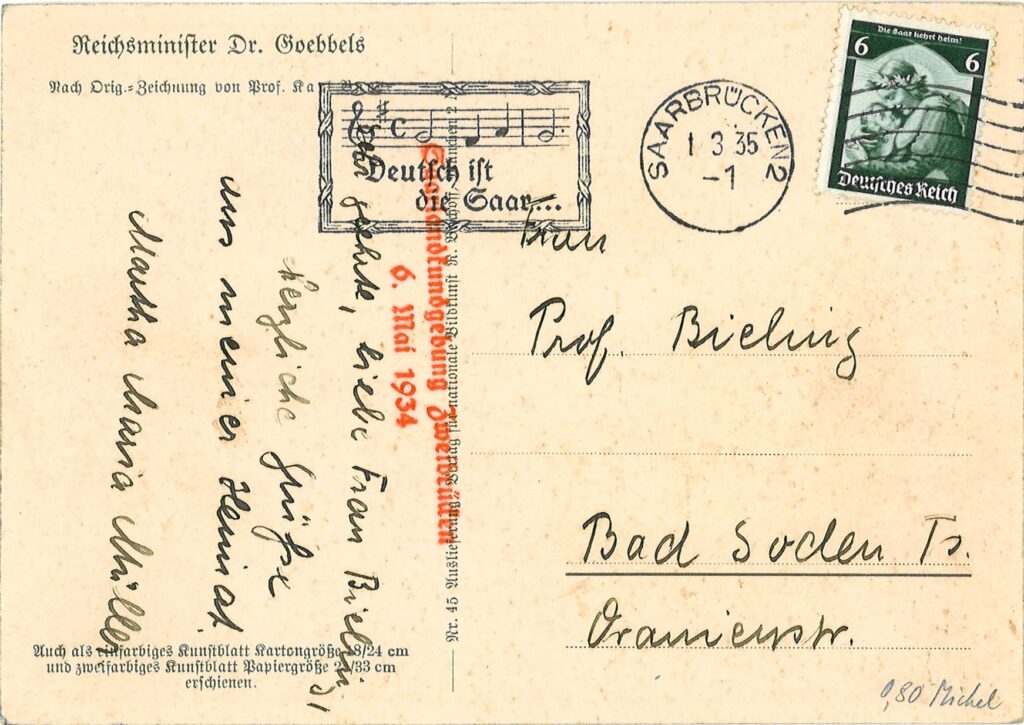
Stamp:
Die Saar kehrt heim!
The Saar returns home!
Postmark:
Saarbrücken 3 January 1935
Deutsch ist die Saar…
The Saar is German…
The Saarland is a region on the border of Germany and France governed by the League of Nations following World War I. In the early 1930s, the region drew the attention of the rising Nazi party and on March 1, 1935, the French government allowed a plebiscite to be held, in which the majority of the population voted in favor of reunification with Germany. The reunification generated a great deal of nationalism in the public. People celebrated with the pro-German song, Deutsch ist die Saar, written by Hans Maria Lux in 1934 for the referendum.
Deutsch ist die Saar: https://www.youtube.com/watch?v=5BSUUCpxteM
Historical background:
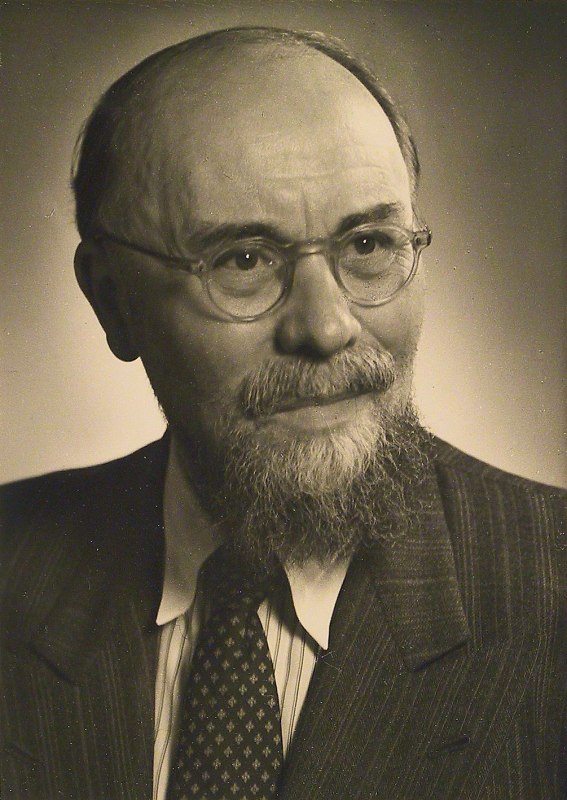
The postcard was sent to Mrs. Luisa Bieling (née Schneider, 1892-1958) of Bad Soden on January 3rd, 1935. She married Dr. Richard Bieling (1888-1967) and had two daughters and a son with him. Dr. Richard Bieling received his doctorate in 1914 under Paul Morawitz in Freiburg im Breisgau with a thesis entitled “Experimental Investigations into Oxygen Supply in Anemia.” During the First World War, he served in the medical corps and became an assistant physician in the reserves. In 1918, he became a research associate and later head of the serum department at the Behringwerke in Frankfurt-Höchst am Main. In 1923, he received his habilitation (highest German degree; above a PhD); and worked as a professor through 1940.
During the Second World War, from 1939 to 1944, he served as a senior medical officer in the Wehrmacht Army Medical Inspectorate as the contact person for typhus. In March 1942, Bieling analyzed the blood of patients in the Jewish Typhus hospital at the Radom Ghetto through employment at IG Farben, a German chemical and pharmaceutical conglomerate which was a major Nazi Party donor and government contractor.
His employment at IG Farben also involved him in typhus experiments at the Buchenwald concentration camp. These experiments involved both observing prisoners who had contracted Typhus naturally and inducing Typhus in prisoners via injection to study the effect of developing vaccines. A total of 950 prisoners were injected with Typhus at Buchenwald, continuing until the camp was liberated on April 11, 1945. In addition to the medical experiments at Buchenwald, Auschwitz, and Mauthausen, IG Farben relied on slave labour from concentration camps, including 30,000 from Auschwitz, for production. One of its subsidiaries supplied the poison gas Zyklon B, which killed over one million people in gas chambers during the Holocaust.
Bieling testified as a witness for the Nazi defense in the Nuremberg Doctors’ Trial in 1947 and IG Farben Trial in 1948. His examinations are viewable under public domain within the Nuremberg Transcripts through the US National Archives Microfilm Publications. In his affidavit for the IG Farben Trial, Bieling testified that he was unaware of the deliberate nature of the typhus infections: “It did not occur to me that [the experiments] could be carried out in a different way—in a criminal way.” There is a significant amount of evidence pointing to the contrary. He failed to report to his cross-examination, citing an illness keeping him in bed. The IG Farben Trial was decided in July 1948. Thirteen of the twenty-four defendants were found guilty, receiving prison terms ranging from one and one half years to eight years in prison, including time already served.
Literature:
Ernst, K. (2007). Das Personenlexikon zum Dritten Reich. Frankfurt am Main, p. 48–49.
Waitz, R., Ciepielowski, M. (July 19, 2022). Typhus experiments on humans at Buchenwald. Kantor, Maria, trans. Medical Review – Auschwitz.
Nichols, B. J. (2015). Victims and Survivors of Nazi Human Experiments: Science and Suffering in the Holocaust. Bloomsbury Academic.
United States of America v. Carl Krauch Et Al. (Case VI). National Archives Microfilm Publications – M892, Digitized by the Dr. Rath Health Foundation. (1948). Roll 11, p.772-808; Roll 14, p. 724; Roll 15, p. 626.
Front:
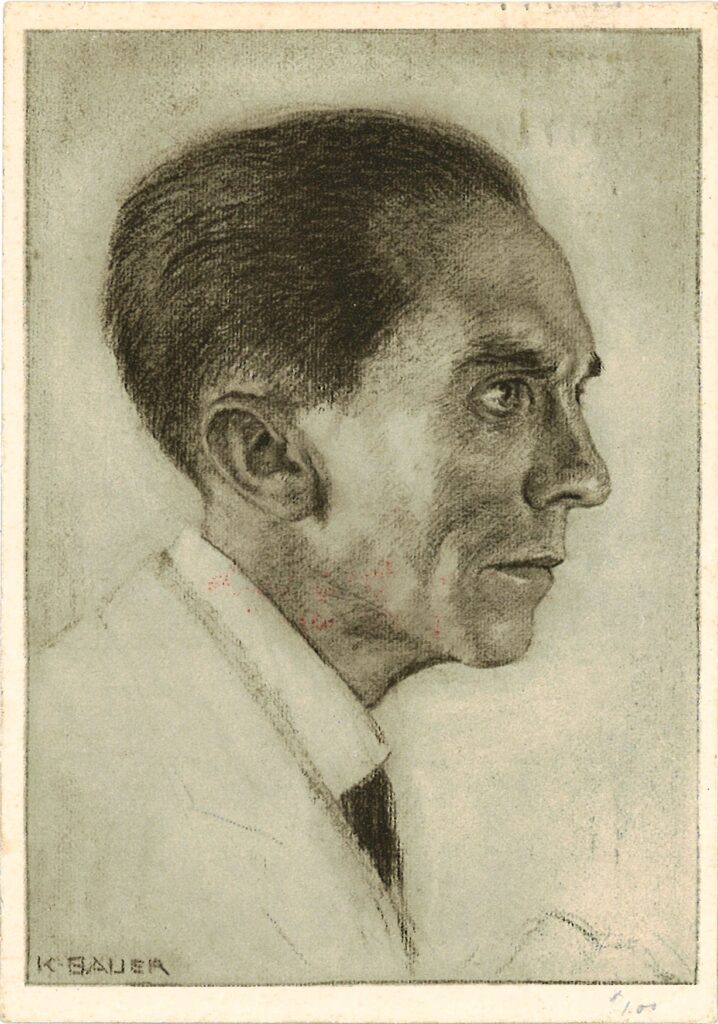
A charcoal illustration of Reichsminister Dr. Goebbels.
Back:
[Address]
Frau Prof. Bieling
Bad Soden
Oranienstraße
Sehr geehrte, liebe Frau Bieling,
Herzliche grüße aus meiner Heimat.
Martha Maria Miller
Most honorable, dear Mrs. Bieling,
Best regards from my hometown.
Martha Maria Miller