
Welcome to the Marsh Institute
The George Perkins Marsh Institute (GPMI) at Clark University is dedicated to research on one of the most fundamental questions confronting humankind:
What is and ought to be our relationship with nature?

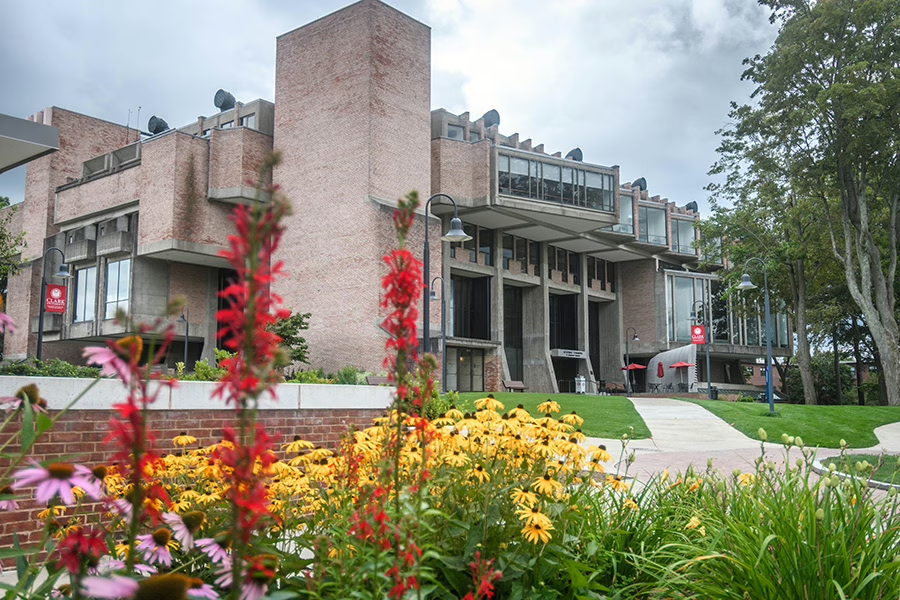
Grounded in nearly a century of basic and applied research at Clark University, the George Perkins Marsh Institute (GPMI) provides national and international leadership in human dimensions of environmental change and coupled natural and human systems. The Institute is home to approximately sixty-five research faculty, staff, and graduate students, and currently maintains over $7 million in active grants and contracts. Although the historical work of the Institute emphasized human-induced changes in the biosphere, recent research has taken a broader perspective to include interactions among social, natural, institutional and technological systems. Among other facilities, offices and centers, the Institute includes the Jeanne X. Kasperson Research Library, whose holdings complete one of the most extensive research collections in North America on risks, hazards and global environmental change. The Institute also houses the offices of the multi-institutional Institute for Energy and Sustainability (IES).
The Marsh Institute seeks solutions to problems facing contemporary society. This requires the coordination of social and natural science with active partnerships both in and outside of the University. Institute activities provide the knowledge necessary for innovative solutions to challenges such as climate change, sustainability, and human health. The Institute does not grant degrees, but advanced degrees can be sought through the affiliated programs and departments of Clark University. The Institute maintains strong ties with Clark University's School of Geography, Department of International Development, Community and Environment (IDCE), Department of Economics, many others. We also have close partnerships with The Mosakowski Institute for Public Enterprise and Clark Labs for Cartographic Technologies and Geographic Analysis. The Marsh Institute is also playing an important role in the Liberal Education and Effective Practice (LEEP) initiative at Clark, providing expertise as well as opportunities for student research and integration with our many active communities of effective practice.
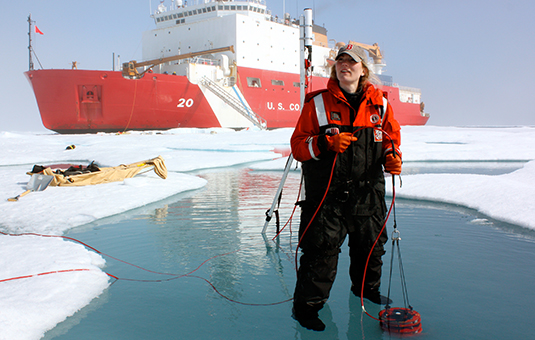
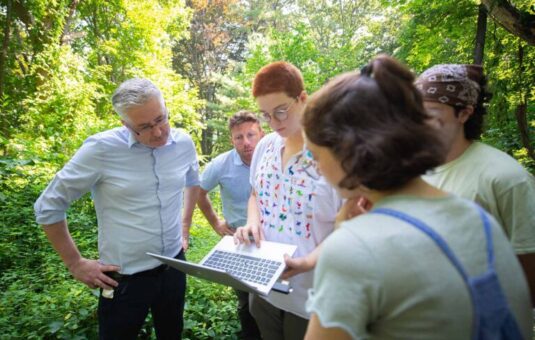
Support for the Institute comes from the University, private donations, foundations, and grants from state and federal agencies. Major grants to Institute researchers support research in such wide-ranging topics as the ecological homogenization of urban America, climate change impacts in the Arctic; the role of forests in preventing global warming; the provision and value of ecosystem services; natural resource extraction and human development; suburbanization and water use; and paradigms in health risk testing. The Institute is home to initiatives that provide students with unique hands-on research experiences, including the Polaris Project in the Siberian Arctic, the Human-Environment Regional Observatory-Central Massachusetts (HERO-CM) research program, and the Albert, Norma and Howard '77 Geller Research Grants for student projects related to sustainability. The Institute also coordinates workshops, conferences and seminars that bring together scientists, students, stakeholders and policymakers to address contemporary challenges in human - environment interactions. Among events sponsored during 2011, the Marsh Institute hosted a visit to Clark University by Dr. Jane Lubchenco, the NOAA Administrator and Undersecretary of Commerce for Oceans and Atmosphere.
In past years, the Marsh Institute played a leading role in developing the Core Project on Global Land-Use/Cover Change (LUCC) for the International Geosphere-Biosphere Programme and the International Human Dimensions Programme, and assisted the United Nations Institute for Training and Research (UNITAR) in developing the analytical capacities to address environmental changes in general. Books resulting from Marsh Institute activities include The Earth as Transformed by Human Action (1990), Regions at Risk: Comparisons of Threatened Environments (1995), and more recently Economic Analysis for Ecosystem-Based Management: Applications to Marine and Coastal Environments (2010).
This website provides links and information regarding the many programs and initiatives supported by the Institute, as well as announcements of seminars and other events. We welcome any input or comments; please contact the Institute Director, Robert J. Johnston.
George Perkins Marsh Institute - Clark University
Visiting address: 16 Claremont Street, Worcester, MA 01610-1477
Mailing address: 950 Main Street, Worcester, MA 01610-1477
Phone: +1.508.751.4622
Fax: +1.508.751.4600
25th Anniversary Symposium »
Marsh Institute Annual Report »