IDCE Home > Research > Activities
Research Activities IDCE Department Clark
Putting Theory into Action
The collaborative research projects of IDCE graduate students and faculty reflect their interdisciplinary approach to issues of environment and development. Many projects build upon partnerships between IDCE and community or governmental organizations around the United States and the globe.
Locally, environmental and community groups often invite IDCE to undertake key community building projects, as well as data gathering and analysis. This allows IDCE faculty and students to put theory into practice right in the neighborhood. By helping to facilitate participatory sessions and building collaborations, students see Worcester neighbors taking action, setting priorities, and maximizing into their human capital and governmental resources. Students hone their analytical skills through GIS mapping of land parcels for development or preservation and through monitoring water quality.
For more ways to get involved locally, see the CDP Graduate Student Guide to Worcester. This document provides an overview of local organizations and initiatives going on in the city. You may also want to visit the Marsh Institute page on current Clark research projects and initiatives.
You may also wish to read our latest annual report, which is focused on the theme of publicly engaged research.

The following are some examples of current IDCE research activities:
aids2031
aids2031 is an UNAIDS commissioned project hosted by Clark University. aids2031 aims to change the face of the pandemic by 2031, 50 years after the AIDS pandemic was first reported. The project brings together multi-disciplinary teams from all over the world—including economists, epidemiologists, and biomedical, social and political scientists—to question conventional wisdom, stimulate new research, encourage public debate, and uncover new evidence on HIV/AIDS. In addition to hosting the aids2031 coordination unit, Clark University is taking the lead on the Social Drivers Group, looking at the key social, political and economic factors that drive the epidemic.
National Children’s Study
ES&P professor Tim Downs, GISDE professor Yelena Ogneva-Himmelberger, and ES&P research professor Rob Goble will participate in the National Children’s Study: the largest and most ambitious long term study ever conducted on how environmental and genetic factors impact children’s health and development in the U.S. The study is funded by the National Institutes of Health (NIH). Nationwide, it will follow a representative sample of 100,000 children from before birth to age 21, seeking information on all aspects of their lives, including their genetic makeup, and their health. In Worcester County, 1,000 children will be followed. It is hoped that the study will lead to a better understanding, prevention and treatment of some of the nation’s most pressing health problems among children and young adults, including autism, asthma, birth defects, cancer, diabetes, heart disease, and obesity. More...
Difficult Dialogues
The issue of climate change or global warming interweaves with all aspects of life on earth. Faced with this emerging planetary challenge, we are called urgently to become knowledgeable of its nature, uncertainties and stakes.
In the dialogue symposium this past spring, we considered climate change so that we may, as a community, deepen our factual knowledge of the issue, explore its multi-faceted sources and impacts, look into the risks and responsibilities ahead, and see from a range of perspectives (political, economic, scientific, aesthetic, ethical, literary, musical, spiritual) as we seek solutions. Check out what's happening this year on campus.
Urban Initiative Competition
In anticipation of the Congressional interest in new and creative urban initiatives and the need for the national administration’s attention to the domestic agendas, Clark University, Community Development Training Institute (CDTI), Freddie Mac, the United States Conference of Mayors and the National Community Development Association are seeking proposals to an Urban Initiative Competition. An award of $20,000 will be given to the winner of each category. The categories are affordable and sustainable housing; neighborhood based economic development and financial services to low income communities.
Engaging Vulnerable Neighborhoods
IDCE and the George Perkins Marsh Institute with their partners, the Worcester Youth Center, Regional Environmental Council, and Family Health Center received a prestigious award of $887,000 over four years (2005-2008) from the National Institute of Environmental Health Sciences (NIEHS) and National Institute of Occupational Health and Safety (NIOSH).
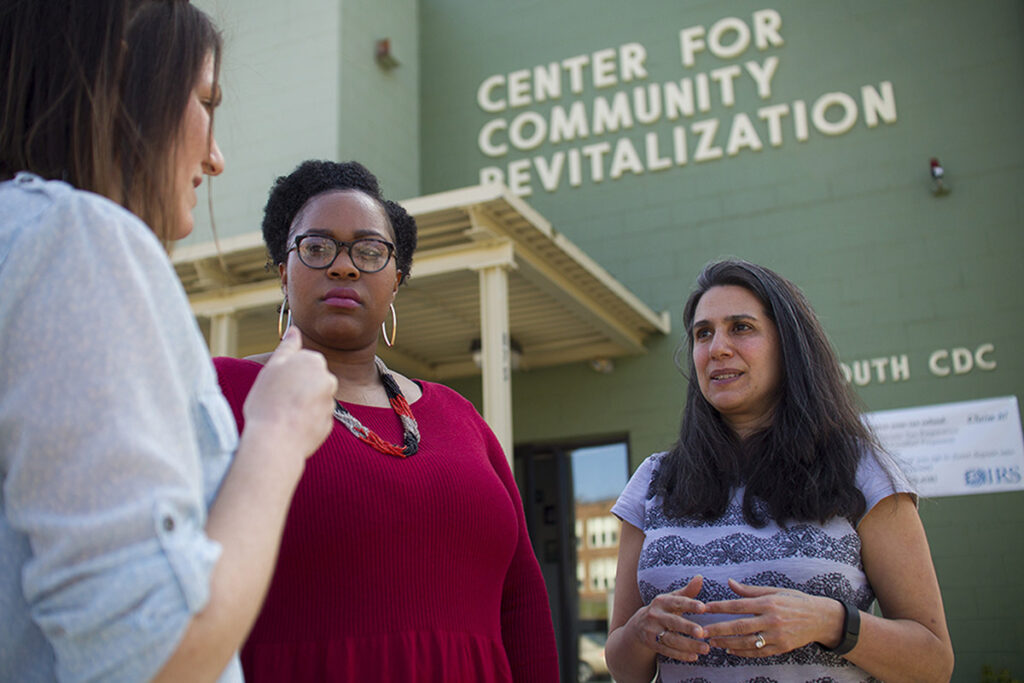
ES&P Program Coordinator Professor Tim Downs and CDP Coordinator Professor Laurie Ross are the principal investigators of the project, "Strengthening Vulnerable Communities in the Worcester Built Environment." ES&P Professor Rob Goble, Dale Hattis, and Octavia Taylor of the Marsh Institute are also playing key roles. The project engages Clark students, faculty, community organizations, and residents of Worcester's Piedmont and Main South neighborhoods.
CDP Research Gives Hope
Laurie Ross, professor of Community Development and Planning in the IDCE Department at Clark University, leads the Healthy Options for Prevention and Education (HOPE) Coalition, a youth-adult partnership in Worcester, Massachusetts formed to reduce youth violence, reduce alcohol, tobacco and other drug use, and promote positive adolescent mental health and youth voice. HOPE consists of 18 local organizations including city government, public schools, health and mental health organizations, as well as other community-based youth serving organizations and is built on the principle that youth must be leaders in efforts to address the issues that affect their lives. Currently HOPE’s youth roster consists of twenty active Peer Leaders who are a group of urban teens of color who have a strong track record in completing social change projects.
HOPE recently engaged in community-based participatory research to promote the enforcement and strengthening of Worcester’s local zoning regulations to reduce store-front advertising of tobacco as well as to limit the number of tobacco vendors in neighborhoods. The Coalition peer leaders drew on their knowledge of teen culture and the assistance from Clark University in using geographical information systems (GIS) to analyze and display data. The youth’s research and action on this issue inspired key decision-makers to help them forge systemic change in local tobacco control efforts. Read more about the project here.
Income Generation for Youth in AIDS-afflicted Ghana
In 2007 , IDCE research professor Richard Ford received a grant of $25,000 from the Ocean Reef Foundation to conduct an experimental training and research program in the Dawa region of the Upper Manya District in Eastern Ghana. Working in cooperation with the Ghana Organization for Volunteer Assistance, the Center for Youth in International Development Programs, and with the aids2031 initiative, Ford and others focused on income generation programs for youth in an AIDS-afflicted region of Ghana. The “Growing Hope” program currently assists a youth cooperative and a women’s cooperative with access to 200 acres of land to increase agricultural output and to process it locally to increase its market value. The grant will provide loans for food processing equipment and farm buildings, and will fund training in management and prevention of AIDS. Ford states, “The rationale for the program is very simple. Solutions exist to reduce the spread of AIDS. While villages can do little to cure AIDS, they can provide new livelihoods that will encourage young people to stay away from the cities.” So far, Clark has provided for the project a vehicle, a laptop with internet access, and a printer, and Ford has volunteered time to train the communities in conflict mediation, local planning, and fundraising.
Corporate Social Responsibility and the Global Reporting Initiative
During the past two decades the corporate social responsibility movement made the practice of issuing voluntary reports on sustainability performance by companies very popular. Created in1997 in Boston, the Global Reporting Initiative (GRI), through a partnership with The United Nations Environment Programme (UNEP) and close links with International Standards Organization and Organisation for Economic Co-operation and Development (OECD), has become the best known and most prestigious set of guidelines for how such reports should be produced, with about a thousand adopters in 65 countries. This year ES&P professor Halina Brown will be completing a three year project, funded by a $320,000 grant from the National Science Foundation that examines the effectiveness of GRI in becoming a new type of global institution. Technical University of Delft in the Netherlands is Clark’s partner in this research. More...
Bridging Barriers: Meeting Youth Immigrant and Refugee Health Needs
IDSC professor Ellen Foley has won a grant from The Health Foundation of Central Massachusetts to fund the project “Bridging Barriers: Meeting Youth Immigrant and Refugee Health Needs in Worcester, MA.” The funding is through the health foundation’s activation fund, which, according to its president Jan B. Yost, is specifically designed to “attract proposals that will promote creative and innovative approaches to alleviating health problems in our community.”
Approximately $60,000 was awarded to Clark University for its collaboration with the African Community Development Corporation, Fairbridge International, and the Southeast Asian Coalition Center to work with immigrant and refugee youth in Worcester who, because of cultural differences, are not comfortable with local youth service agencies. This project will begin with primary research that will form solutions in creating after-school programs to better suit the needs of the young population of refugees and immigrants in Worcester public schools.
Climate Change Emerging Technologies
ES&P professor Jennie Stephens conducts research on diffusion of emerging energy technologies with potential to contribute to an energy system transformation and for climate change mitigation. The research is a collaborative effort between Clark, University of Minnesota and Texas A&M. It is funded by a three year $390,000 grant from the National Science Foundation, Science and Society program. The project examines the interconnected, state-level, socio-political influences on diffusion and deployment of emerging energy technologies. It focuses on two cases: wind power and carbon capture and storage (CCS), both of which have great potential to change the energy technology landscape and to dramatically reduce carbon dioxide emissions in the U.S. By conducting a retrospective analysis of the diffusion history of wind power technology in six geographically and politically diverse states—Massachusetts, Minnesota, Texas, Montana, New Mexico, and New York—the study seeks to identify the key factors in its diffusion so far. It then seeks to use the insights from that analysis to inform government policies related to future diffusion of wind and CCS technologies.
The following are some examples of past IDCE research activities:
City of Lewiston, Maine
The Somali refugee community in Lewiston, Maine, had difficulty assimilating into the city, so City Manager Phil Nadeau invited IDCE Research Professor Dick Ford and former IDSC professor Laura Hammond and a handful of IDCE students to help.
Ford observed, "The conflict mediation and community building that we undertook in Lewiston, ME is a direct outgrowth of our work in Somaliland. The Somalis in Lewiston come from all different clans and bring animosities and baggage from the civil war. The first step in community building is conflict mediation; then community building can follow. The mediation skills that we honed in Somaliland were used in Maine."
Better understanding and communications between the Somali community and city government are being built based on these efforts.
To read more about the project, click
here.
Blackstone River Conservation Alliance
The Metacomet Land Trust approached IDCE for technical support to create a GIS database of privately-owned open space in the Blackstone River watershed for possible acquisition and conservation. Oscar Maroto (IDSC/M.A. '03) and
former GISDE Professor Eugenio Marcano produced GIS maps of privately owned open space in the Blackstone Watershed for collaborative protection efforts. Katie Scott (IDSC/M.A. '03) worked with the Metacomet Land Trust to promote the creation of a regional Blackstone Watershed Alliance, a network of 56 environmental organizations, including Mass Audubon, the Nature Conservancy, and the Narrangansett Bay Estuary.
City of Worcester
Clark has a long history as an active partner in economic and community development in Worcester. The Mayor's Office and City's GIS Department regularly contact the GISDE program with requests for student assistance. The City realizes that Clark and GISDE are a good resource for mapping assistance. In return, IDCE students get involved in an experience that gives them important, real applications here in Worcester.
For several years Worcester's Mayor has solicited Clark's assistance in doing GIS analysis of the location of Worcester's brownfields, particularly relative to their proximity to schools and water sources. In 2004, the mayor invited two GIS interns to work on maps of brownfields for redevelopment. The maps helped developers identify contiguous vacant properties or brownfields that met their square-footage needs. New businesses could view the maps to figure what vacant properties might be combined; currently only lists of vacant parcels exist with no information about their relation to each other. The search for abandoned contiguous properties that could add up for future development is clearly an important GIS application.
Environmental Impacts Assessment in Latin America
IDSC graduate students worked with Tim Downs on different fieldwork projects that took them to Mexico: Jessi Grillo (IDSC/M.A. '04) and Briera Dale (IDSC/B.A./M.A. '04) assessed the impacts on marginalized communities of land-tenure reform under the North American Free Trade Agreement. Saulo Araujo (IDSC/M.A. '04) assessed the successes and failures of watershed management approaches, with emphasis on community participation and capacity-building needs. Alex Chen-Chiquin (ES&P/M.A. '04) explored the options for integrated solid waste management in his native town in Guatemala.
Marine Biology Laboratory, Woods Hole
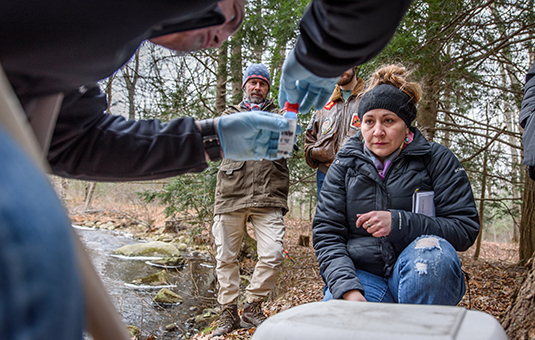
The GISDE Program has a close partnership with the Marine Biology Lab (MBL) in Woods Hole, MA. Students and faculty regularly collaborate on research on the Ipswich River Watershed, the third most toxic in the U.S.
"We do the GIS research there, and MBL does the water quality research. The National Science Foundation has designated the Ipswich as a Long-term Ecology Research Site. Every year we have many GISDE students who use this data for their master's topics," says Professor Pontius.
EPA-Commissioned Mercury Study
In 2004, the Environmental Protection Agency commissioned a study, "Determining the Vulnerability of Populations to Mercury", with IDCE research professor Rob Goble and Clark professor Dale Hattis. Other team members included Jasmine Tanguay and IDCE students Stella Capoccia ES&P/M.A. '04 and Alexandra Dichter ES&P/B.A./M.A. '04.
This study explored three elements:
1) Exposure of populations to mercury emissions
2) Susceptibility of those populations to the potential harm caused by the exposure, and
3) The ability of the exposed and susceptible populations to cope with the harm.
Vulnerability often results from the interaction these elements; however, extremes of any one of these can also signal significant vulnerability in a subpopulation.
"We were charged by the EPA to review the literature and to examine ways in which different populations can be vulnerable to mercury exposure," says ES&P Professor Sam Ratick. We created a framework to understand the coping mechanisms and vulnerability of different populations. It was a great team effort. The ES&P students organized the literature review and helped us design the research."
The report underscored that the high exposure to mercury in humans results primarily from the consumption of large quantities of contaminated fish. Most mercury released in the U.S. comes from combustion, with coal-fueled power plants the largest contributors. Much of the mercury emissions is deposited in the U.S. in patterns similar to the deposition of acid rain, with high concentrations in the waters of Northeast, North Central, and Southeast United States.
Cities for Climate Protection
On the recommendation of ES&P Professor Halina Brown and graduate student Carissa Williams (ES&P/B.A./M.A. '04), Mayor Tim Murray has added Worcester to the Cities for Climate Protection Campaign (CCP) to begin reducing local global warming emissions. Williams and ES&P undergraduate major Hannah Muller created an inventory of all major sources of greenhouse gas emissions in Worcester.
YOU Inc.
YOU Inc. Director Moe Boisvert and Clara Githaka, a family stabilization specialist from Kenya, have also turned to Clark and IDCE to explore a partnership. Githaka worked with
Katie Scott (IDSC/M. '03) to pursue water quality research. In September 2003 they did a child welfare needs assessment in Nairobi. After interviewing NGOs, government officials, and street children to determine needs of families, they found that no official child welfare system exists in Kenya. YOU Inc. is exploring a possible partnership with Clark to create an International Institute for Child Welfare, which could offer practitioners from Kenya and Worcester IDCE courses in project development, management, monitoring, and evaluation.
NASA Research on Unmanned Aerial Vehicles (UAV)
GISDE graduate students Scott Sweet, Louis Paladino, Matthew Traina, Sean Grimland and Megan Van Fossen worked on research projects with Earth Science Professor Stan Herwitz, who received a $3.76 million NASA grant for his landmark research on imaging using solar-powered Unmanned Aerial Vehicles (UAV). Deborah Parker (GISDE/M.A. '02) worked closely with Herwitz to interpret remote sensing imagery from coffee plantations in Hawaii to determine the optimum growing conditions. Other GISDE students in the UAV project are the primary GIS consultants in a multi-institution effort to examine the threat of mercury pollution throughout the entire northeastern North America.
Technological Innovations in Sustainable Personal Mobility
ES&P Professor Halina Brown is investigating with students new approaches to personal transportation that have lesser environmental impact than the modern automobile. Cassie Buckley (ES&P/M.A. '03) performed two case studies of three-wheeled electrically powered vehicles, focusing on their social acceptance and their impact on how individuals think about satisfying their need of mobility. Jamie Salo (ES&P/B.A./M.A. '03) studied the issues of developing a suitable infrastructure for cars powered by hydrogen-based fuel cells.
|