Frequently Asked Questions (FAQs)
Q) What is the difference between IDSC and IDCE?
IDSC, or International Development and Social Change, is one of the four main program
titles in IDCE, or
the Department of International Development, Community, and Environment. There are
two undergraduate majors within IDCE:
IDSC and the
Environmental
Science and Policy (ES&P) track of the Environmental Science (ES) major. International Development and Social Change (IDSC) is one graduate program, and the
three other graduate programs in IDCE are Community Development and Planning (CDP),
Environmental Science and Policy (ES&P), and Geographic Information Sciences for
Development and Environment (GISDE).
Q) What courses should I take if I am interested in exploring a major
(or minor) in IDSC?
ID 125: Tales from the Far Side and Culture and Development
are excellent exploratory courses for the IDSC major. They both satisfy the Comparative
Perspective of the PLS. ID 125 is also a required core course. ID 120 can serve
as a core course for the IDSC major. Students can also take a number of other IDSC
courses that help explore the major and satisfy the PLS perspectives.
Q) Should a first-year student explore the PLS during their first year?
Or is it better to focus more on fulfilling prerequisites for the major?
PLS requirements allow students to sample different perspectives, which will enhance
their understanding of international development issues and give them a breadth
of knowledge.
Q) What courses should first-year students steer clear of?
Generally first-year students are discouraged from taking 200-level courses. However,
if you have a strong interest in a topic, as well as the necessary prerequisites,
then you should consult with the professor of the course.
Q) What courses should first-year students take?
First-year students who know that they want to major in IDSC should take introductory
courses such as Culture and Development or ID 125: Tales from the Far Side.
You should also take Econ 010 as early in your undergraduate career as possible.
Although Econ 010 does not count toward the major, it is a prerequisite for the
IDSC required course, Econ 128.
Q) What courses are required for an IDSC major?
The IDSC major stresses creative, cross-disciplinary approaches to development.
The major requires 14 units, including 5 core courses, 4 courses in an area of specialization
to deepen your understanding of a particular theme or issue in international development,
3 methods and skills courses, one internship or directed research project, and a
culminating capstone seminar to be taken in the spring semester of your senior year.
1. Core Courses (5 units)
ID 125 Tales from the Far Side: Development and Underdevelopment; ECON 128 Development
Economics or an equivalent economics course; and three additional core courses (one
each) in politics of development, resource management, and socio-cultural issues.
2. Area of Specialization (4 units)
With approval of their advisors, students select a specialization—such as community-based
development, political economy, conflict and development, culture and development,
resource management, or gender and development. A minimum of two of these courses
must be at the 200-level.
3. Methods and Skills Courses (3 units)
ID 132 Research Methods and two courses from the following: computer science, cultural
anthropology, cartography, statistics, geographic information systems (GIS), conflict
negotiation, or a foreign language at the intermediate level.
4. Internship or Field Research (1 unit)
A one-credit internship or field research related to international development.
This may be combined with a Study Abroad Program.
5. Capstone Seminar (1 unit) or Honors Thesis (2 units)
ID 290 Capstone Seminar is taken by all IDSC majors in the fall of their senior
year. Students will complete a research project on the topic of their choice related
to their specialization. Students doing a Senior Thesis will begin their thesis
in the Capstone Seminar and complete it in the spring of their senior year under
the supervision of their thesis advisor.
Q) What if I am interested in a double major?
Many students decide to double major in IDSC and a related department. Some of the
most popular double majors include: IDSC and Economics, IDSC and Geography, IDSC
and Government (especially International Relations), IDSC and Psychology, IDSC and
Sociology. One recent student had a double major in IDSC and Studio Art. A major
in IDSC and a minor in one of the related departments or programs, such as Women's
Studies, is another popular option. Note that up to two courses may count toward
both majors.
Q) What is required for an IDSC minor?
A minor in IDSC consists of six credits: a core course, a skills course, and at
least four courses in an area of specialization of which no more than two credits
can be from an internship or study abroad. One Core Course: ID 125: Tales from the
Far Side, Culture and Development, or ID 131: Local Action, Global Change
One Skill Course: IDSC minors will take one social science research methods course
(e.g., Psych 105: Quantitative Methods, Govt 107: Research Methods in Politics,
Soc 105: Sociology Research Process, or Geography 141: Research Methods in Geography).
Four Courses in an Area of Specialization: IDSC minors take at least four courses in an area of specialization of which no more than two credits can be from an internship or directed research. Students may follow established specializations (e.g., Political Economy, Conflict and Development, Gender and Development, Culture and Development, Participatory Development or Rural/Community-based Development, Resource Management) or design their own, with approval of the Coordinator of IDSC Undergraduate Program. A min. of two courses must be at the 200-level.
Q) Which courses count toward my major or minor?
All courses with an ID prefix (including those cross-listed with other departments)
count toward the IDSC major. See the full list of ID courses in the Clark Academic
catalog, as well as the list of courses available during the pre-registration period
each semester. It is from this list of courses (which is constantly being updated)
that you choose thematic core courses as well as courses for your area of specialization.
Q) What courses in related departments do majors usually take?
IDSC majors have wide-ranging interests, and international development is by definition
an interdisciplinary field. Therefore IDSC courses are often cross-listed with other
departments and programs, such as geography, psychology, sociology, government,
and women's studies. In addition, students are strongly encouraged to take language
classes to fulfill their skill requirements. (Note: only language classes at the
intermediate or higher levels count toward the major.)
Q) What courses should I take before going on a Study Abroad program?
In addition to the courses listed in the recommended sequence for the IDSC major,
you should preferably take some of the three required skills and methods courses
before undertaking independent research or study abroad. For example, taking appropriate
language courses before going abroad is a good idea especially since language proficiency
is often a prerequisite for participation in some Study Abroad programs. Remember
that for language courses to count for the skills requirement of the IDSC major,
you have taken them at an intermediate level or higher. Another good course to take
is one of the research methods courses.
Q) Do the courses I take while studying abroad or at an institution other
than Clark count toward my major or minor?
Many study abroad programs focus on themes related to IDSC. Students often undertake
internships or independent research projects while away. The credits you earn while
you are abroad or during your semester away from Clark may count toward your major.
This is something to discuss with your major advisor before you go away for the
semester or the year.
Q) What internships do IDSC students find?
An internship is required (ID 299), and students often do an internship during their
study abroad programs. Other IDSC majors have found internships locally at such
organizations as Lutheran Community Services, Grassroots International, AIDS Project
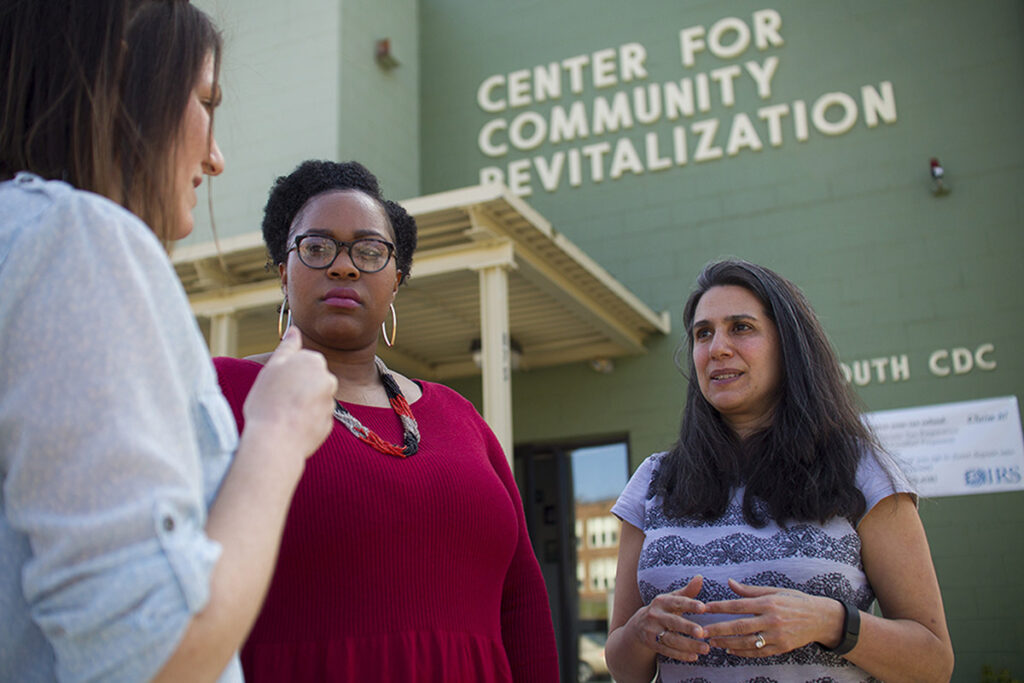
Worcester, or the Main South Community Development Corporation.
Students participate in a project at the community or wider level in order to learn how activism works practically. You can experience first-hand the opportunities and challenges of effecting change, protecting human rights, and raising public awareness. Read more here.
Q) What kind of independent research do IDSC majors conduct?
Many IDSC majors present their research projects at Academic Spree Day each year.
You should find out the date and attend that year to give you some ideas. Some recent
topics include: "Global to Local: The Transnational Effect of the AIDS Pandemic,"
"Animal Rights Koalition (ARK) or Starting a Campus Organization," and "A Gendered
Perspective on the South African Truth and Reconciliation Commission." Read more
about the Research Activities going on in IDCE
here.
Q) What about the Fifth-Year BA/M.A. Program in International Development?
Clark IDSC, geography, and GES majors who have successfully completed an honors
thesis on a topic in international development and social change may earn a combined
bachelor’s and master’s degree, with the fifth year tuition free, provided that
they meet departmental and University guidelines. The accelerated
B.A./Master's degree
in IDSC allows students to build on their undergraduate analytical skills and
pursue a specific area in international development in depth.
Q) What jobs and careers do IDSC majors pursue?
You may wonder what you can do with a BA in International Development and Social
Change; it may seem a fascinating study, but does it actually lead to employment?
What kinds of jobs do IDSC graduates have? Do IDSC graduates have to become development
practitioners? Or do they do other things? Check out
IDCE Careers to see
what some IDCE graduates are doing. You will see that they are active in many different
and important fields.
Q) Who do I contact about the IDSC Program?
Professor Ken MacLean, the Coordinator of
the IDSC Undergraduate Program, will be happy to answer any questions, as would
any of the other IDSC core faculty (Kiran Asher, Dave Bell, Jude Fernando, William
Fisher, Ellen Foley, Liza Grandia, and Marianne Sarkis). Read about all IDCE faculty here.
First-year students are encouraged to talk to current IDSC majors and attend the many talks, brown bag discussions, and other events organized through IDCE at 10 Hawthorne Street. In addition, the IDCE Department holds information sessions every semester for students considering a major or minor in IDSC and hosts a table at the Undergraduate Majors Fair each fall. Be sure to keep a look out for the dates or check in with the undergraduate coordinator, Professor Ken MacLean.