

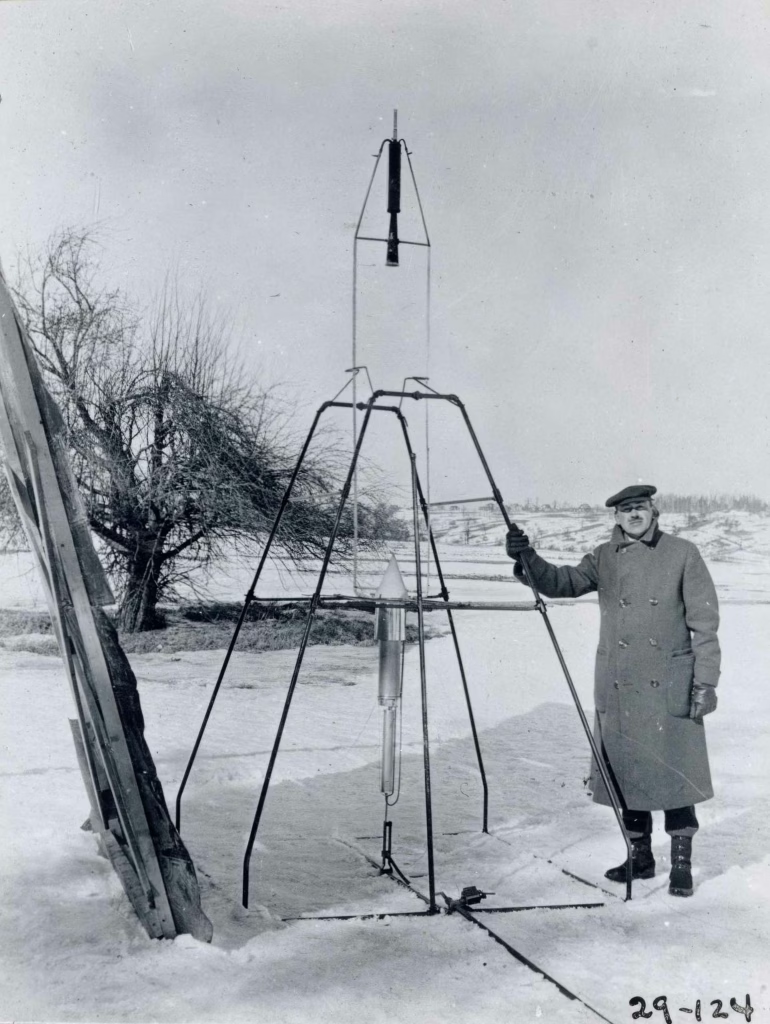
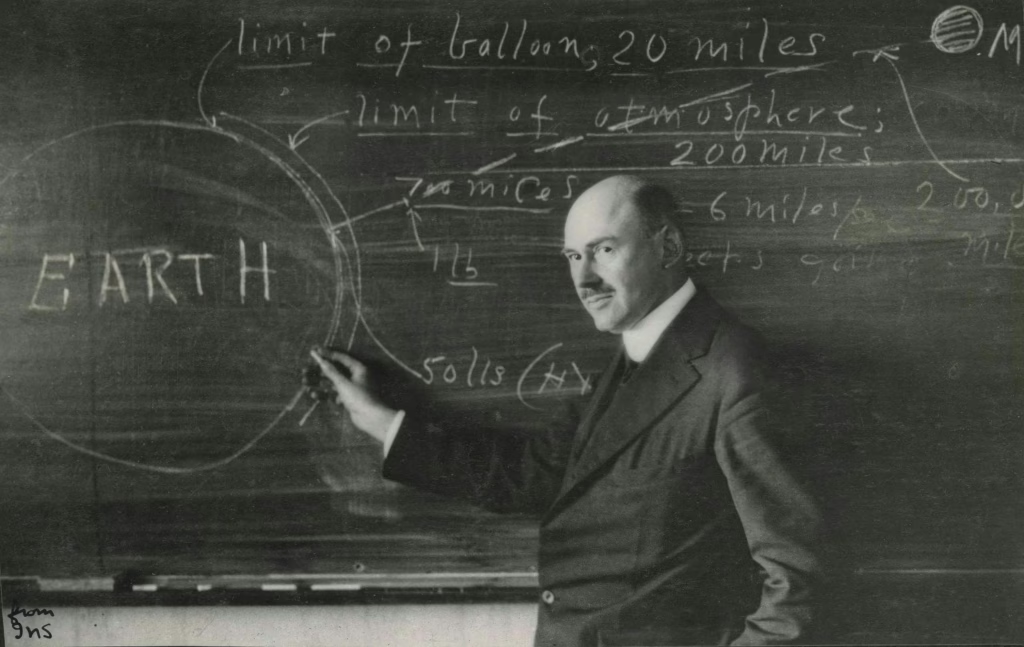
On March 16, 1926, Robert H. Goddard, a Clark-trained scientist, launched a liquid fuel rocket into the sky from the frozen ground of his Aunt Effie’s farm in Auburn, Massachusetts. The rocket flew 41 feet into the air and landed 184 feet away, traveling for 2.5 seconds.
They were 2.5 seconds that changed the world.
We celebrate the 100th anniversary of Goddard’s historic launch with a gallery of artifacts housed in the Clark University Archives and Special Collections. They are items, most of them worn and weathered, that reveal a brilliant and churning mind.
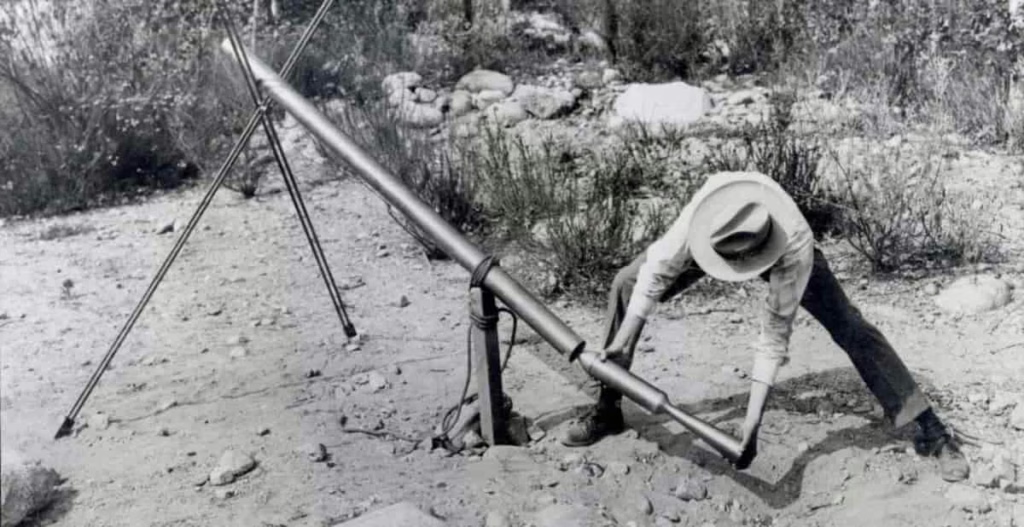
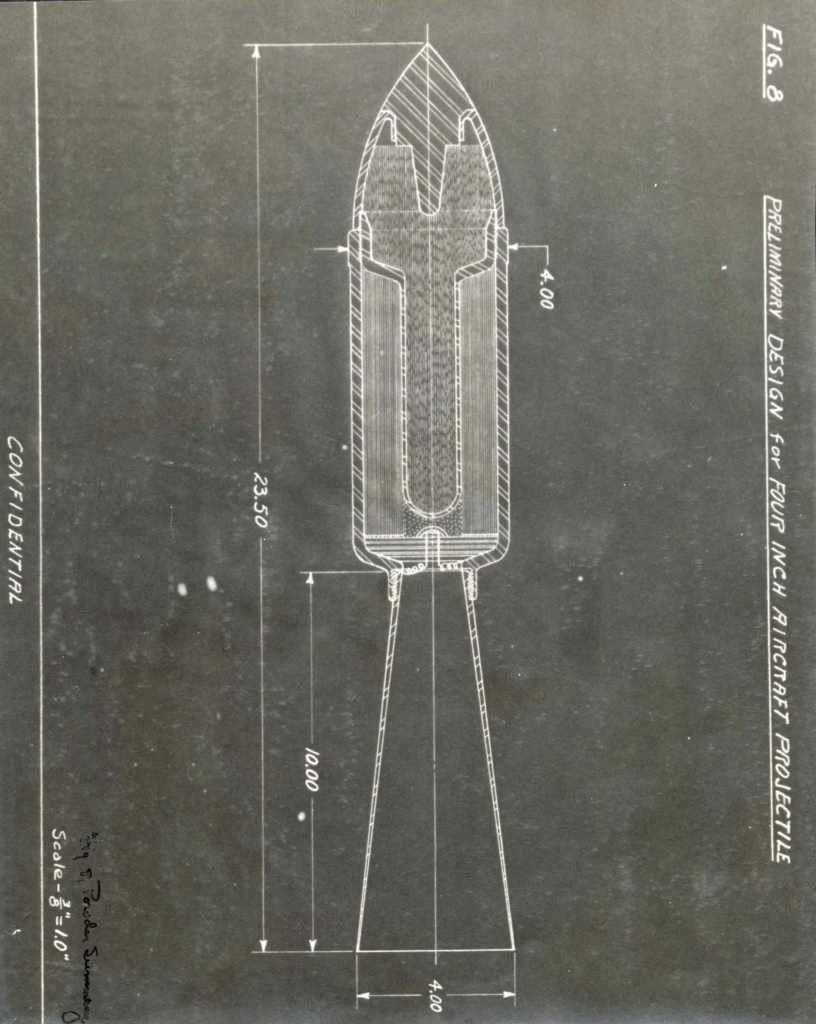
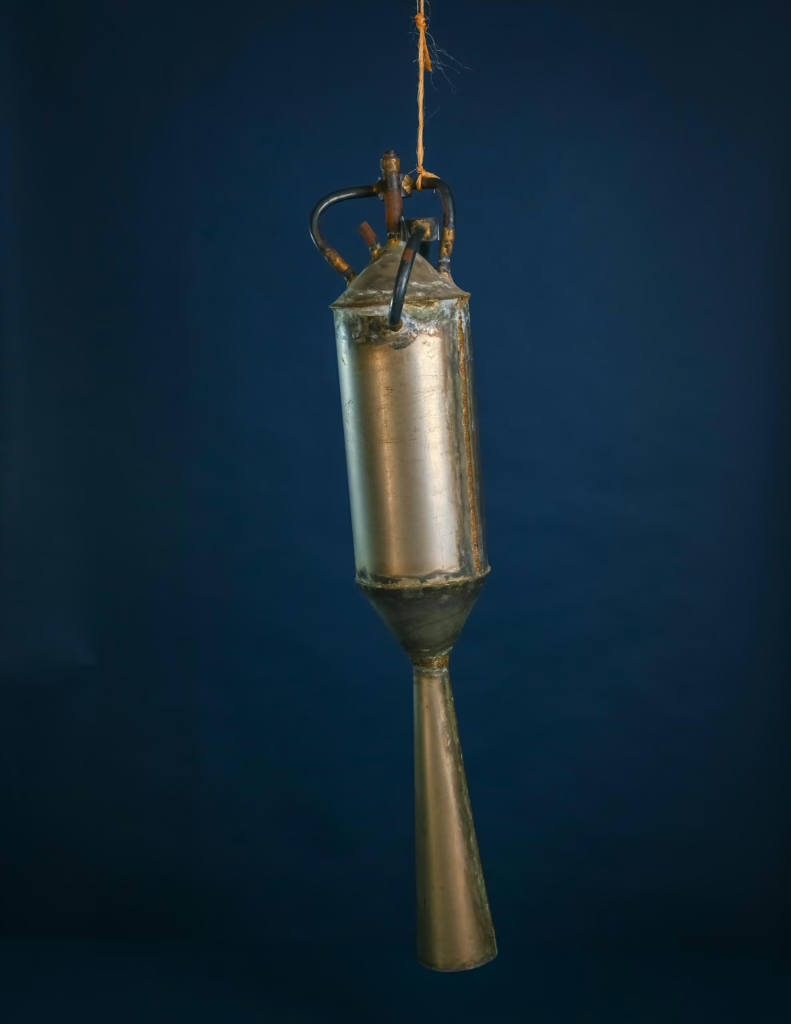
Robert H. Goddard designed this liquid-propellant rocket motor circa 1930.
Robert H. Goddard experimented with gyroscopic technology to control the flight path of rockets.
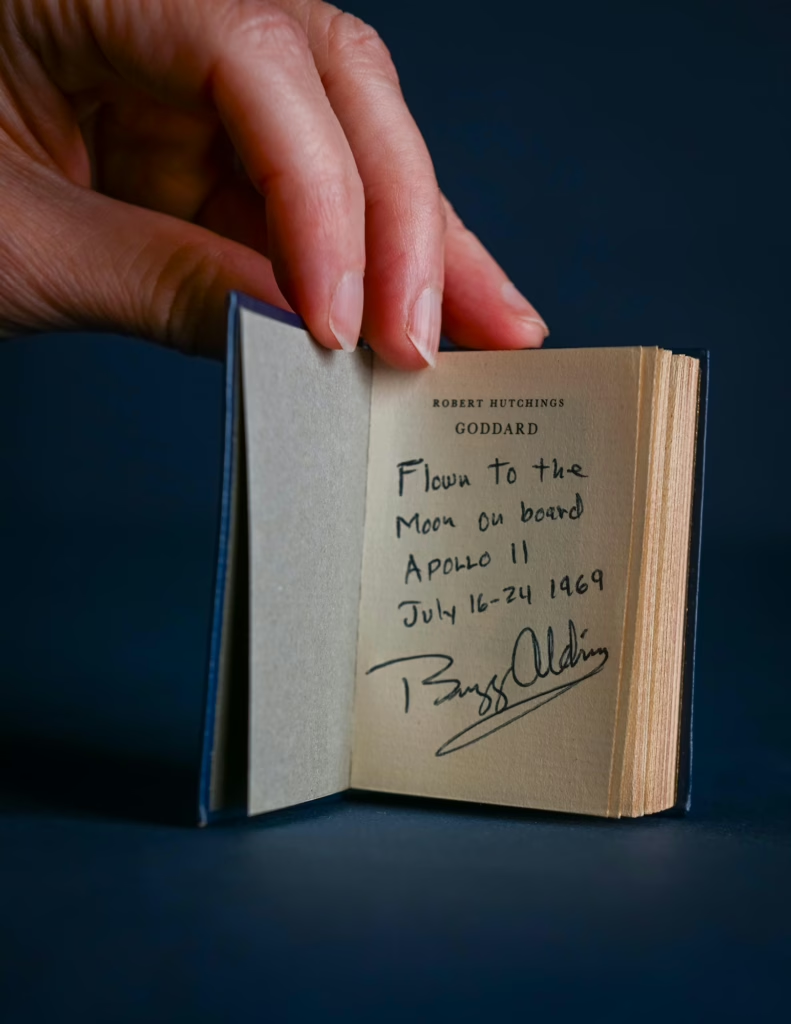
This autobiography of Robert H. Goddard was the first book ever flown to the moon.
While launching a liquid fuel rocket into the sky is the scientist’s most renowned intellectual feat, figuring out how to steer it once it got there may have been his most overlooked.
Gyroscope
Goddard experimented obsessively with gyroscopic technology, and in April 1932, conducted a brief test in which a rocket’s flight path could be primitively—but successfully—controlled. Goddard’s early technologies were foundational to the sophisticated systems that guide today’s spacecraft, planes, and seagoing vessels.
This early gyroscope of Goddard’s is worn and nicked and probably still bears traces of his DNA.
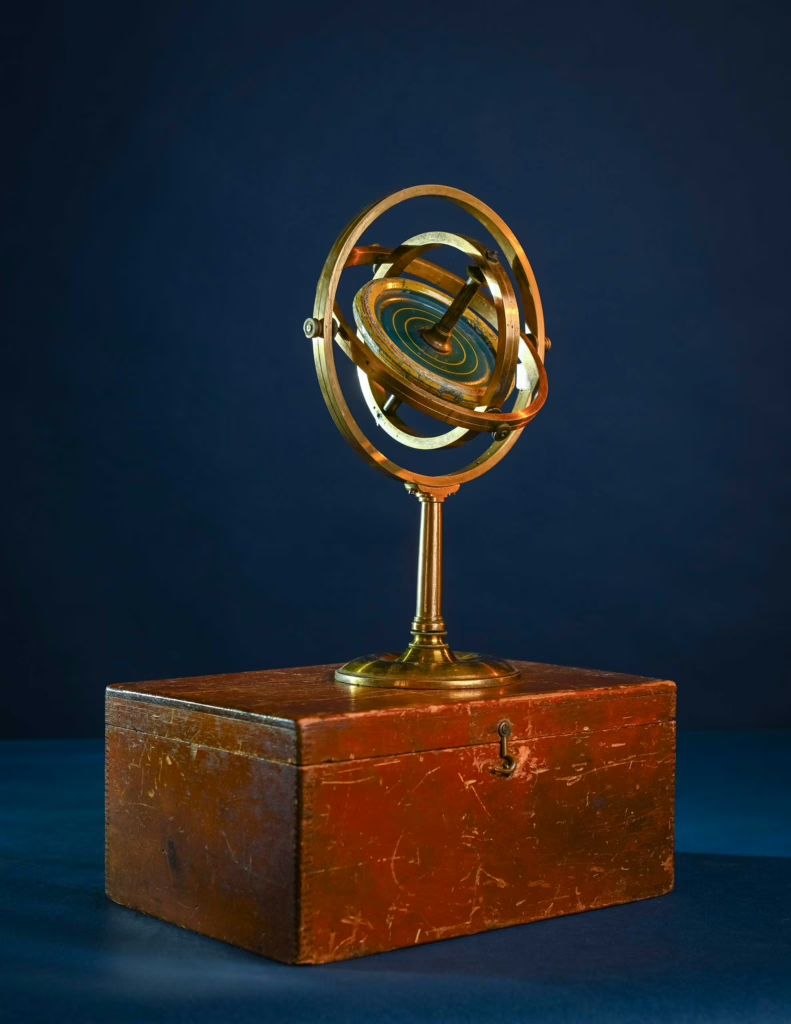
Robert H. Goddard Collection, Clark University
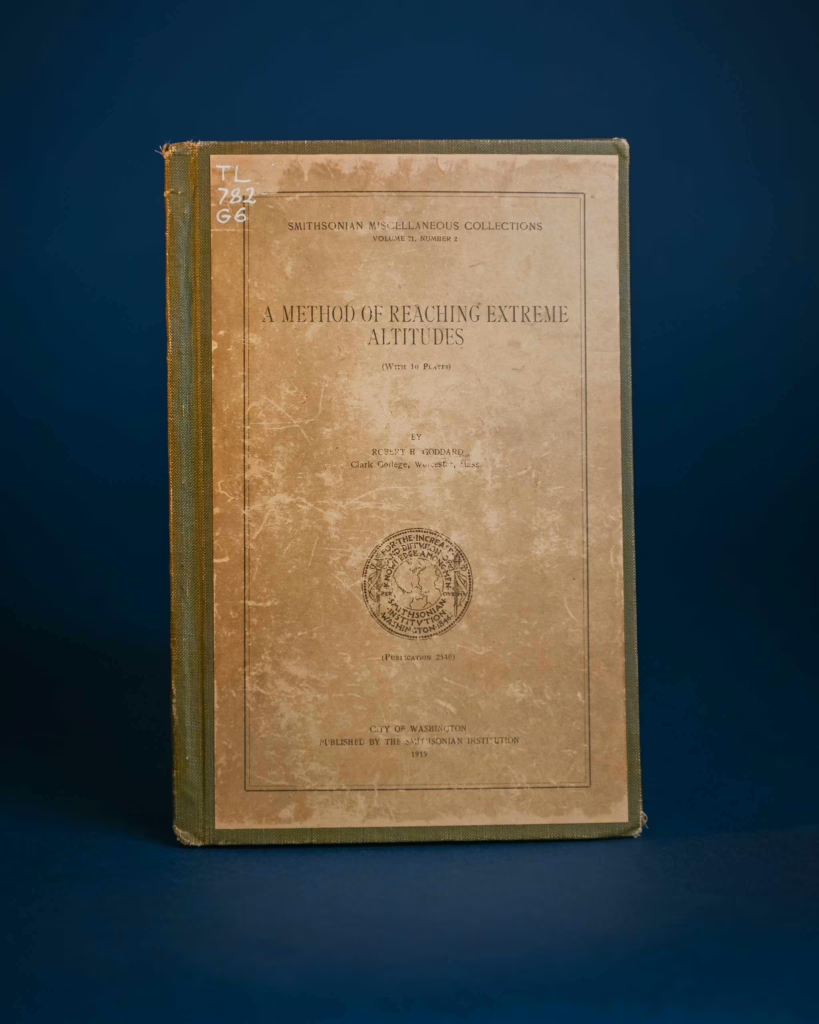
Robert H. Goddard Collection, Clark University

A Method of Reaching Extreme Altitudes
The title is hardly dramatic, but the ideas expressed between the worn covers of this 1919 edition of the Smithsonian Miscellaneous Collections were, for their time, electric.
While Robert H. Goddard had been writing about the possibility of a liquid fuel rocket as early as 1909, this essay served as both a significant refinement of his theories and a request for funding of his rocketry experiments—the start of a decades-long sales pitch to deep-pocketed benefactors, nonprofit institutions, and the federal government.
Goddard found an early fan. “I believe the theory is sound, and the experimental work both sound and ingenious,” wrote Charles Abbott, secretary of the Smithsonian Institution.
“It seems to me that the character of Mr. Goddard’s work is so high that he can well be trusted to carry it on to practical operation in any way that seems best to him. I regard the scheme as worth promoting.”
The War of the Worlds
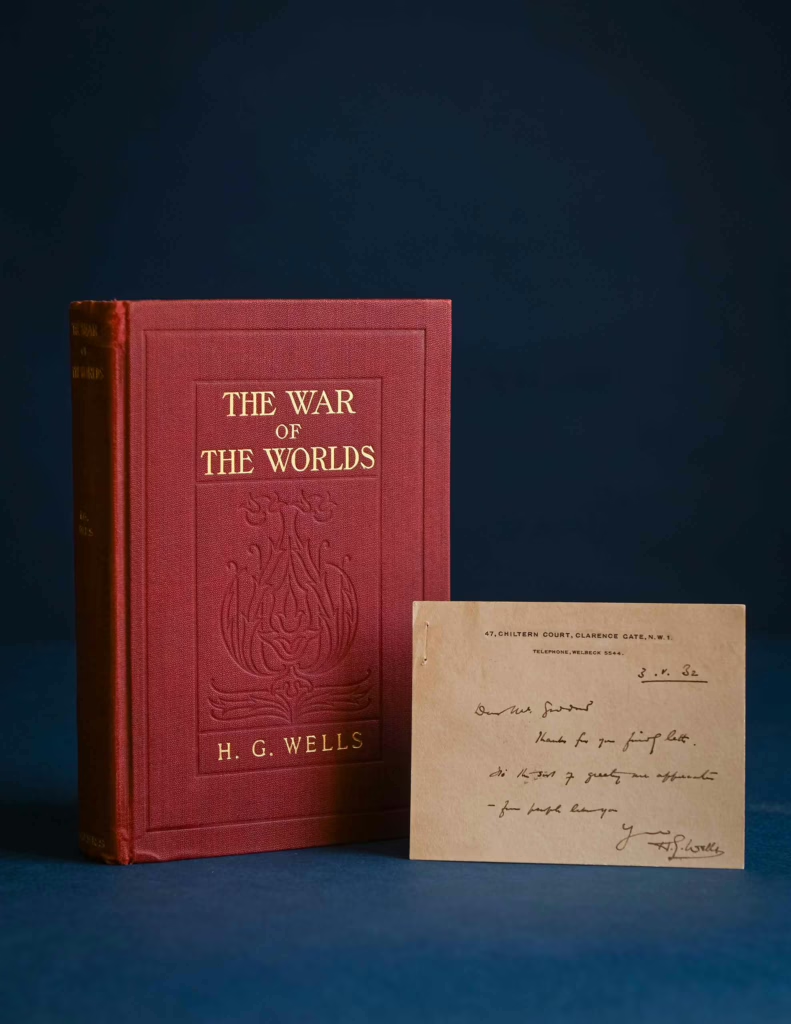
Several health ailments kept young Robert H. Goddard housebound for much of his childhood, but he used the quiet time to become a voracious reader. One of his seminal influences was H.G. Wells’ science fiction classic The War of the Worlds, which set the Worcester boy’s imagination afire with the possibilities of interplanetary travel.
Goddard never forgot the author’s impact on him and later wrote him a fan letter, which elicited a response from Wells: “Thanks for your friendly letter. It’s the sort of greeting we appreciate—from people like you.”
Robert H. Goddard Collection, Clark University
Launch frame
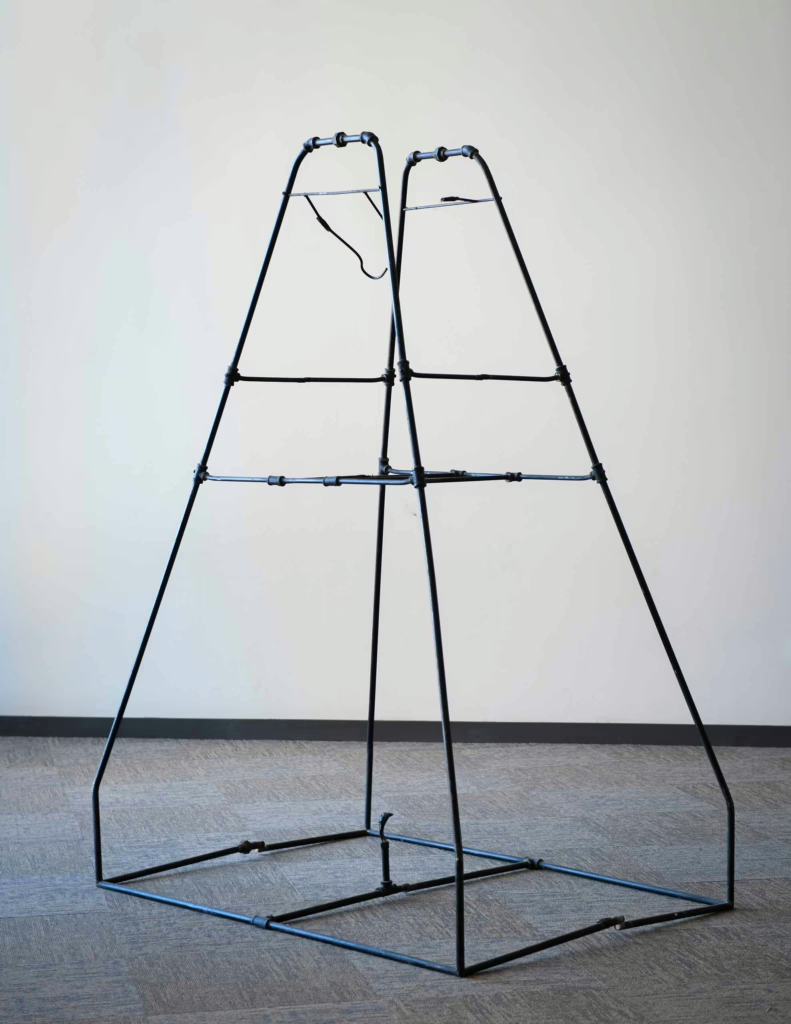
One of Goddard’s early launch frames of pipes and joints is shown reassembled in the Goddard Library.
From his Aunt Effie’s farm in Auburn, Massachusetts, Goddard sent the first liquid-fuel rocket 41 feet into the air and 184 feet from the frame.

The rocket flew for 2.5 seconds. It was a brief but historic journey.
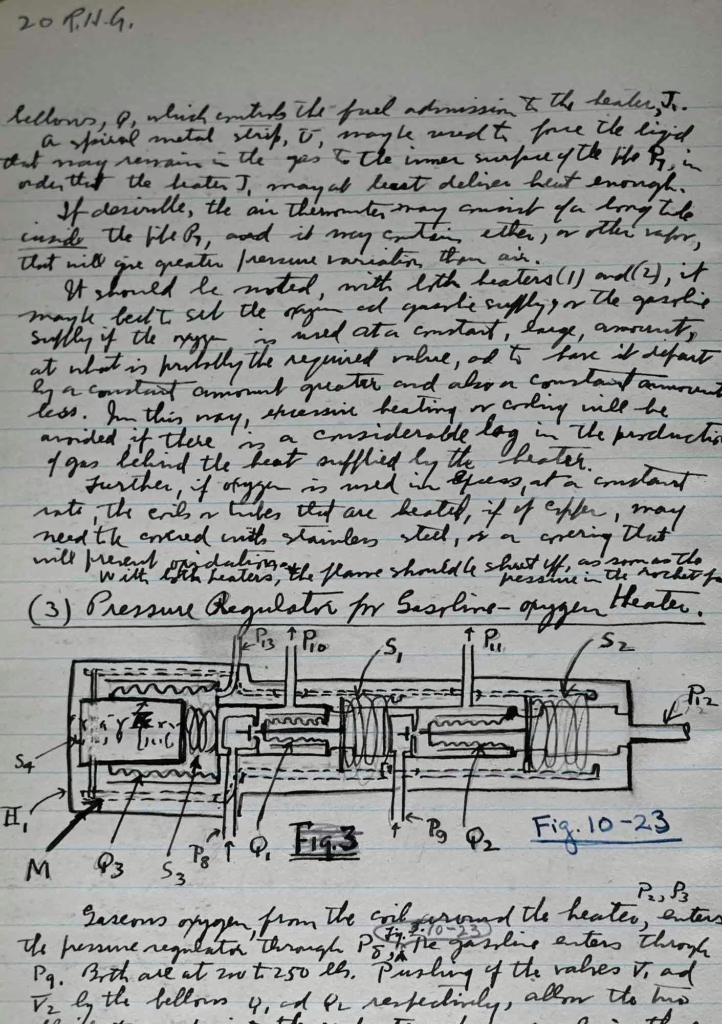
Notebook
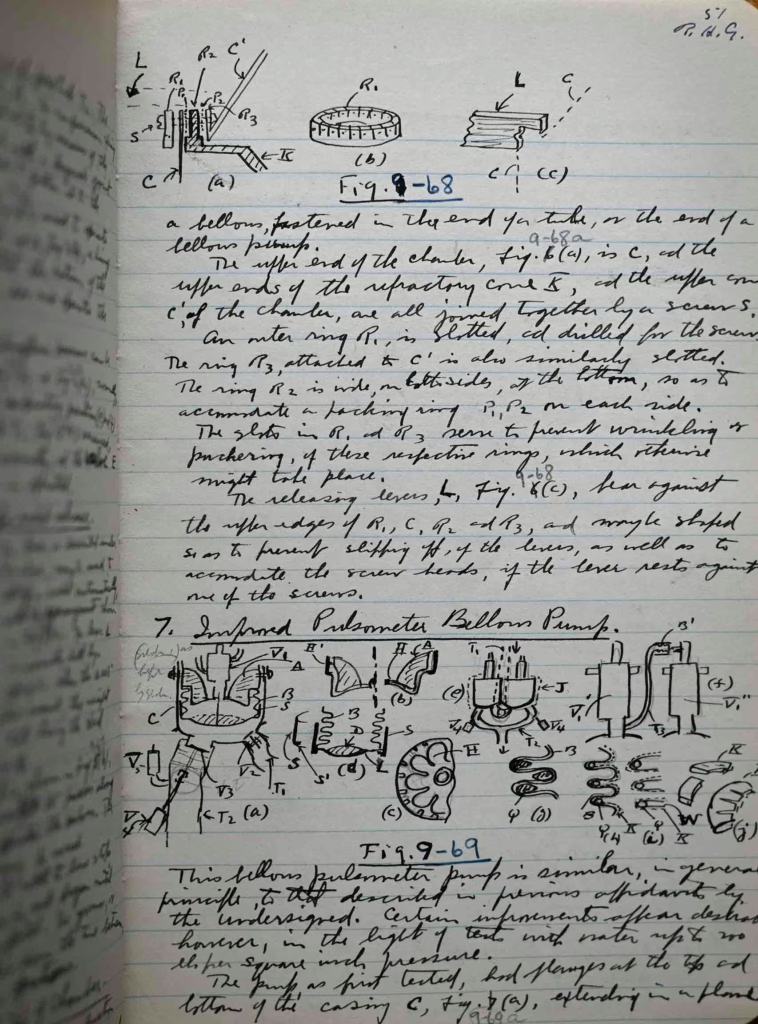
Robert Goddard began keeping a diary in 1898, and he never stopped writing until his death in 1945. His notebooks burst with detailed accounts of his ideas, observations, inspirations, and experiments, some entries accompanied by hand-drawn illustrations of rocket components and their interactions.
He and Esther took care to have his notebook pages notarized—Goddard was intensely protective of his inventions and wary of the theft of his intellectual property by competitors in Germany and Russia.
Robert H. Goddard Collection, Clark University
While the prose that flowed from his pen tended toward the technical, he sometimes hinted at the poetic.
In an entry reflecting on his historic 1926 launch, he imagined the rocket describing its own wobbly flightpath: “I’ve been here long enough; I think I’ll be going somewhere else, if you don’t mind.”
Robert H. Goddard Collection, Clark University
Liquid-propellant rocket motor
This motor of Dr. Robert H. Goddard is from about 1930. Just a year earlier, he’d launched the first liquid-propellant rocket to carry scientific instruments—an aneroid barometer and thermometer.
The rocket flew to 90 feet but crashed, the noise and resulting grass fire creating a public sensation. It was reported that the publicity led to Goddard’s rocket work coming to the attention of aviator Charles Lindbergh, who got him connected to the Daniel Guggenheim Fund for the Promotion of Aeronautics.
Robert H. Goddard Collection, Clark University
However, in a 2011 interview for Clark Magazine, astronaut Buzz Aldrin insisted that his father, Edwin Aldrin Sr., Clark class of 1915 and a former student of Goddard’s, made the fortuitous introduction of Lindbergh to Goddard.
Robert H. Goddard Collection, Clark University
“Robert Hutchings Goddard — Father of the Space Age”
An artifact may travel a great distance to reach its final destination. But 477,714 miles through the void of space?
That was the journey of a credit card-sized book, the autobiography of the rocket pioneer and long-time Clark professor. The leather-bound tome with gold-leaf edging was the first book ever flown to the moon.
Astronaut Buzz Aldrin actually had brought two copies of the book without thinking to inform NASA but later confirmed they had visited the moon aboard Apollo 11. He later gave a copy to Robert Goddard’s widow, Esther, who donated the book to Clark’s archives.
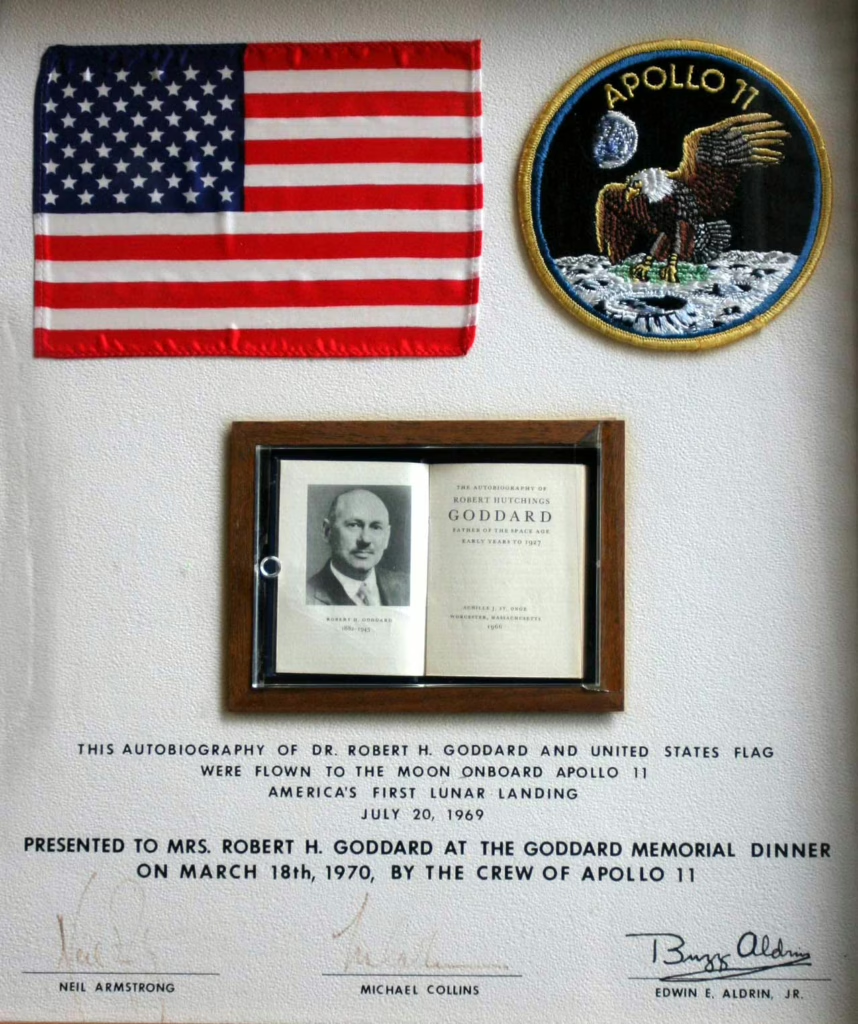
The book is framed with an American flag and an astronaut’s shoulder patch also taken to the moon.
Robert H. Goddard Collection, Clark University
Congressional Gold Medal
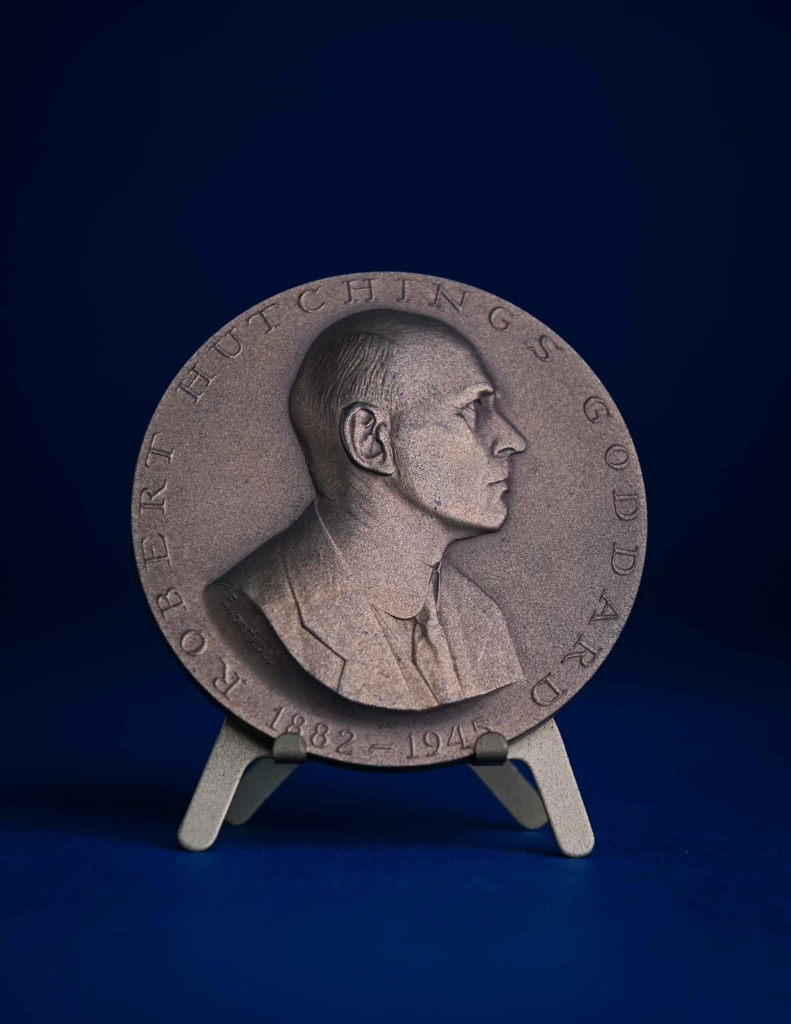
In 1959, Robert H. Goddard was posthumously awarded the Congressional Gold Medal, one of the highest U.S. civilian honors, for his pioneering work in rocket development (this is the Archive’s bronze reproduction of the original).
The Congressional Gold Medal expresses appreciation for distinguished achievements and contributions, beginning with its first recipient, George Washington, and including honorees from George Gershwin to Rosa Parks to Mother Teresa, who reflect a vast range of accomplishment and sacrifice. And the efforts to put humans into space have been amply recognized: The crew of Apollo 11 and NASA’s “hidden figures” mathematicians are medal recipients.
