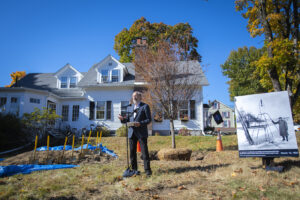
In 1926, from a field not far from campus, Robert H. Goddard launched the world’s first liquid-fueled rocket.
It was a breakthrough that expanded what humanity believed was possible and forever altered how we understand our place in the universe.
As we mark the 100th anniversary of that historic moment, we consider the discovery it helped shape, and the questions that now call for equally bold imagination.
Goddard and the first launch
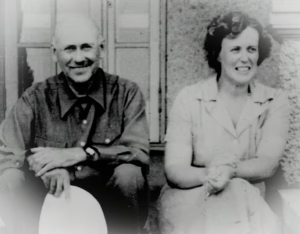
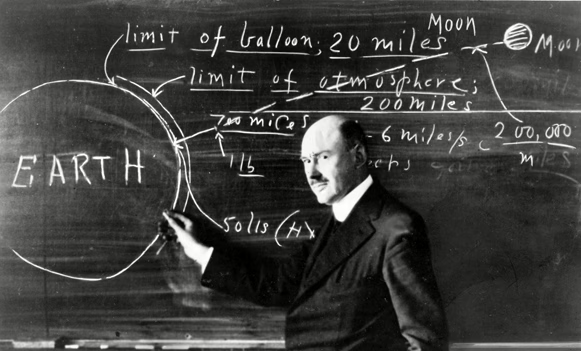
After earning his master’s and doctorate at Clark, Robert H. Goddard began teaching here at 1914 and served as director of the physics department for 20 years.
Clark University’s Robert H. Goddard Collection, housed in the Clark University Archives and Special Collections, brings his discoveries to life.
How to steer in space
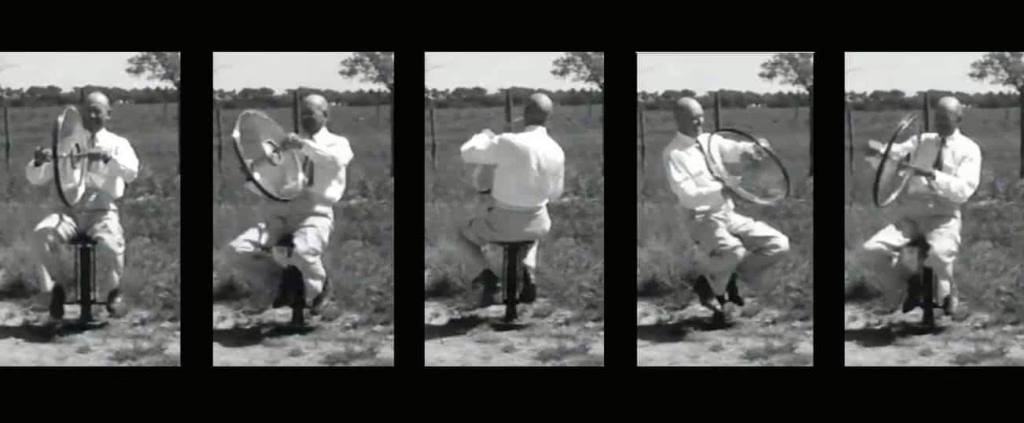
Harnessing conservation of angular momentum to maneuver a vehicle was a key discovery to sending a rocket into space. Watch Professor Charles Agosta explain how it works.
Legacy of discovery
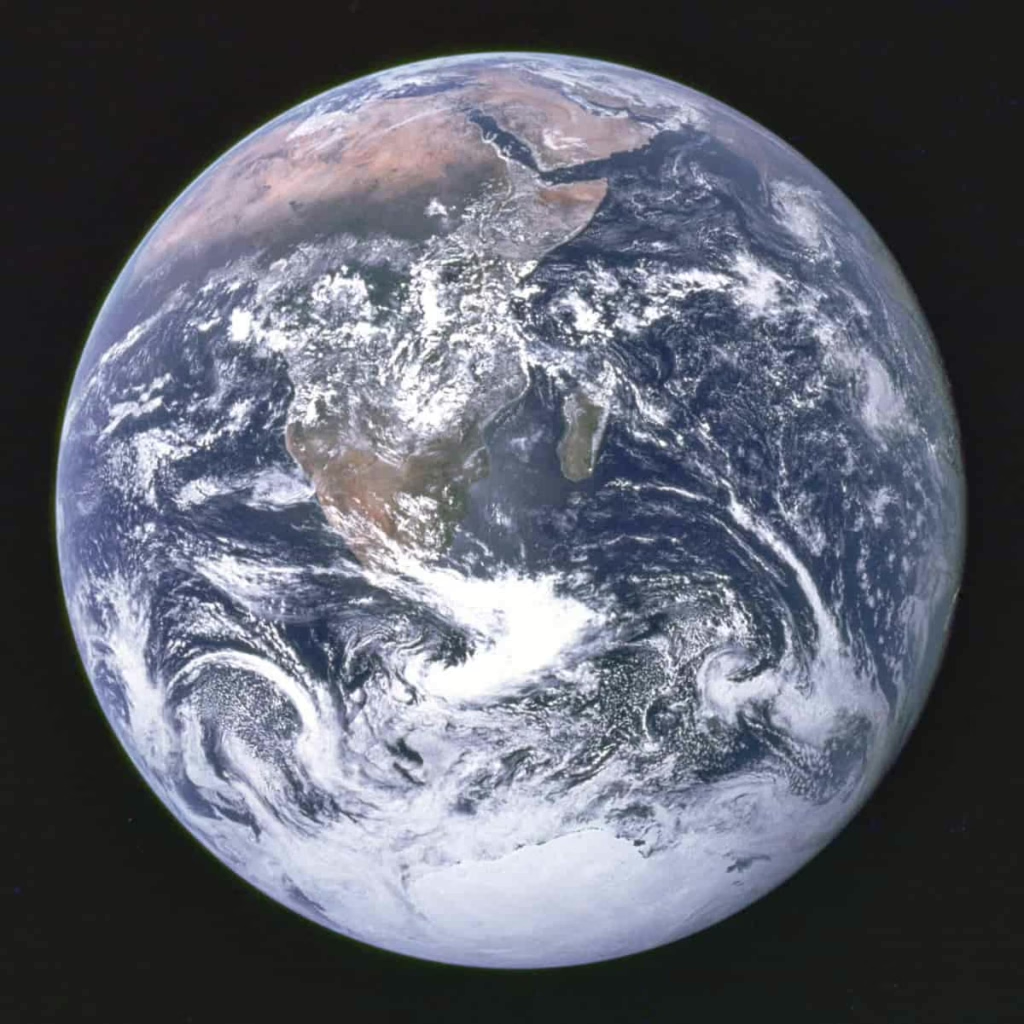
Astronauts who ventured into space describe a moment that changes them forever.
Looking back at Earth from space, they see no borders, no divisions — only a luminous sphere suspended in darkness. Known as the “overview effect,” this profound shift in perspective deepened the sense of connection toward humanity and the planet.
Learn more about research at Clark that is grounded in shared vision.
Join the centennial celebration
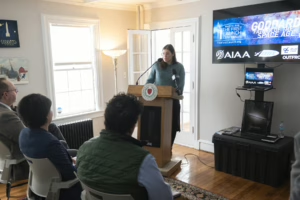
A century after the first successful liquid-fueled rocket launch, Clark commemorates the milestone with public talks, archival exhibitions, and community partnerships across Worcester.
The next moonshot
Clark students share their thoughts about the environment, the planet, and what they see as their moonshot — the great challenge of their generation.
“My generation’s moonshot is learning to see ourselves as an integral part of the natural ecosystem, rather than separate from it.
“It has become critical for humans to understand that we are a product of this natural world, and we must preserve and keep it clean as you would your own home.”
Marshall Fredericksen, M.S. ’26
“Even if it starts with small and whimsical attempts like crocheting a new tote bag, decorating our water bottles, and avoiding using generative AI, we have a real desire to live more sustainably while practicing our free expression.
“It’s a duty to the planet that we will eventually inherit and a duty to stay true to ourselves and have a little fun while doing it.”
Ashley Pascua Valois ’25, MPA ’26
“It is difficult to say what is impossible, for the dream of yesterday is the hope of today and the reality of tomorrow.”
Robert H. Goddard
