
Places of Displacement
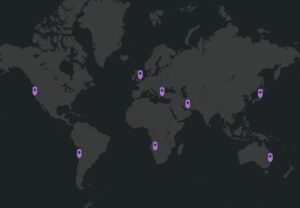
Cities have long served as “places of displacement” where forced migrants found safety, built livelihoods, dealt with risks and marginalization, and identified opportunities. In the contemporary era, the humanitarian system of aid agencies, intergovernmental organizations, local charities, and other actors have followed forced migrants to these places of displacement to deliver aid and administer services. For this course, students were asked to choose a city that serves as a ‘place of displacement’ for forced migrants, explore the dynamics and interactions between forced migrants, other urban populations, municipal service providers and governments, and humanitarian actors, and analyze the city considering current discourses and events. In the end of the course students were asked to share a short video presentation that focuses on the tensions present between the city, the forced migrants, and the humanitarian efforts and include a brief overview of the history of the city and the populations of refugees, discuss Humanitarian and Municipal Policy Context of your city and consider the applicability of the “sanctuary city” and city as nexus to the city of choice.
Below, please see links to select student presentations from cities as diverse as Khartoum, Peshawar, Johannesburg, Massachusetts, Cairo and New York City.
- Annemaire Walsh: Khartoum, Sudan (https://youtu.be/i6uhdLwXI50)
- Emily Dunsmore: Peshawar, Pakistan (https://youtu.be/4DU7zz8FJhs)
- Hallie Fleming: Johannesburg, South Africa (https://youtu.be/5GiGWSP4H04)
- Anna Walker: Boston, Massachusetts, United States (https://youtu.be/TrW_S5MHfHA)
- Greer McCarty: New York City, New York, United States (https://youtu.be/7P35e8omyZU)
- Fatma Ali: Cairo, Egypt (https://youtu.be/46BWOvncuZw)
Book Review of Exit West by Mohsin Hamid
As a class, we read the celebrated 2017 novel Exit West, by Mohsen Hamid. The story reflects most, if not all the themes of our class. This assignment comprised reading the novel, discussing the story, framework, characters, and producing an “alternative book review”.
The students were asked to create a book review and discuss the following: While urban forced migration is a relatively new subject for academic study, cities have long been the destination for people fleeing political conflict, violence, or other causes of displacement. How does Mohsin Hamid convey to the reader that the subjects of the story are refugees or other forced migrants? How does the author bring out the relationship between the forced migrants and the different urban environments they experience? How do their experiences in cities differ from the other, non-urban contexts they spend time in? How does Hamid portray the interactions between urban residents and refugees on the move? How do you understand the “magical doorways” in Hamid’s novel?
- Selected works: