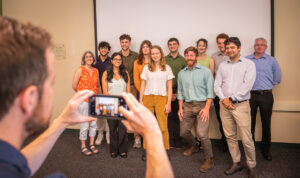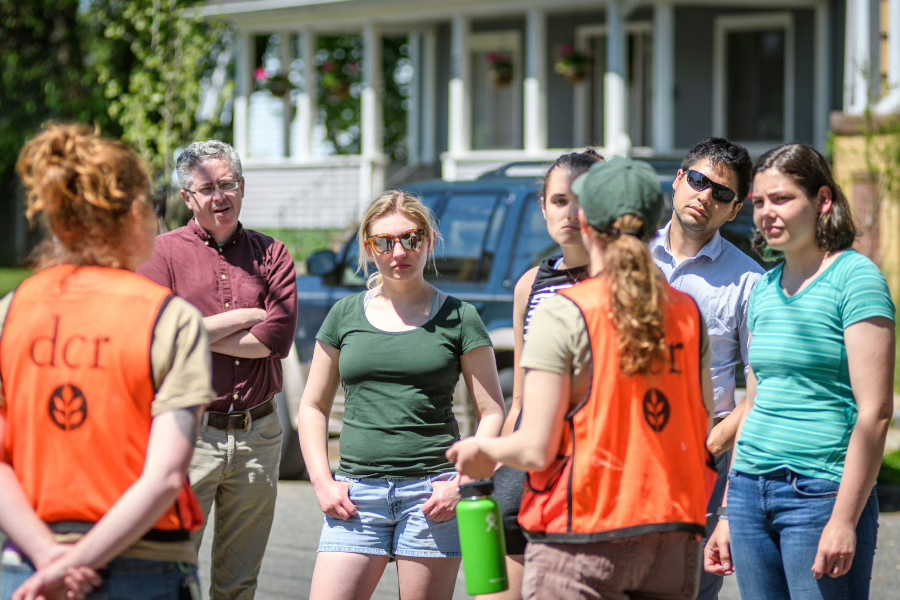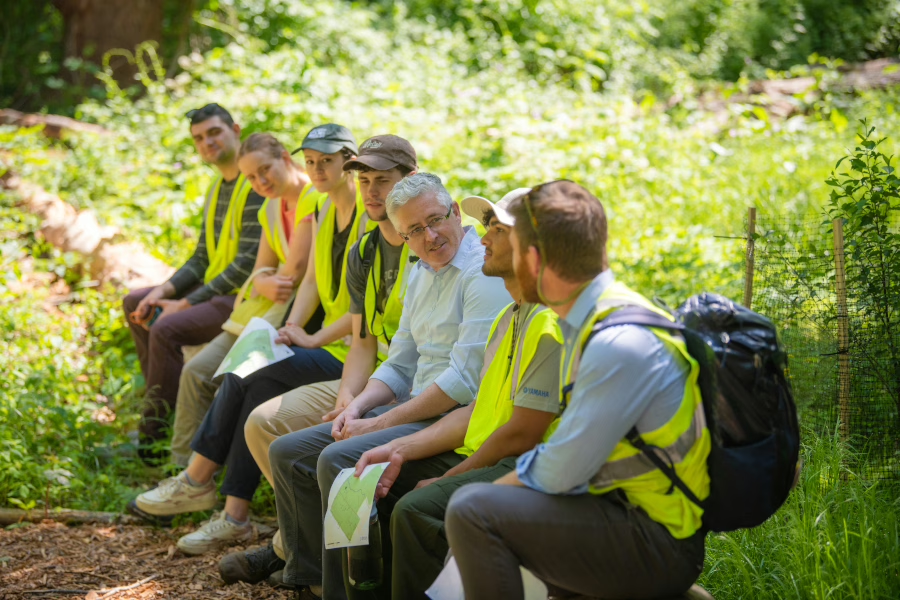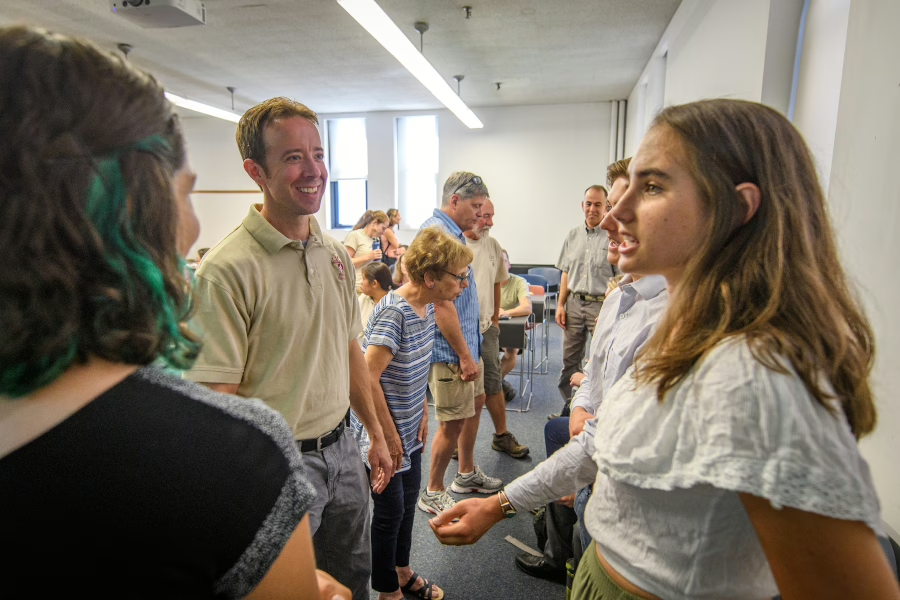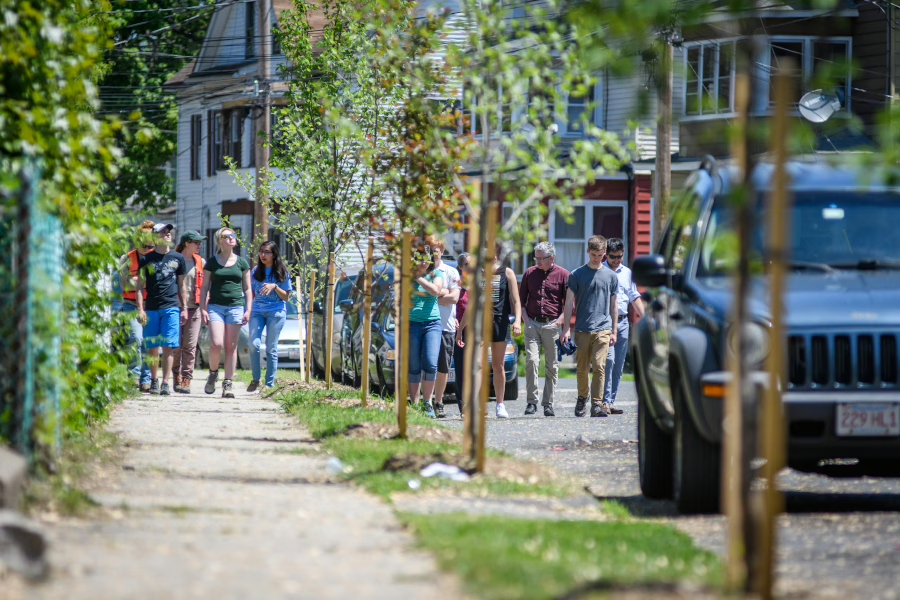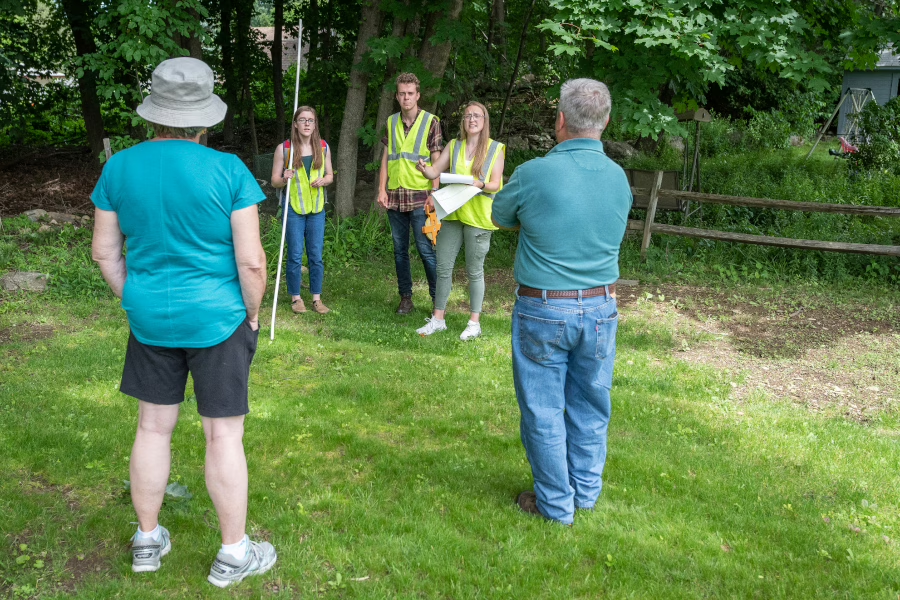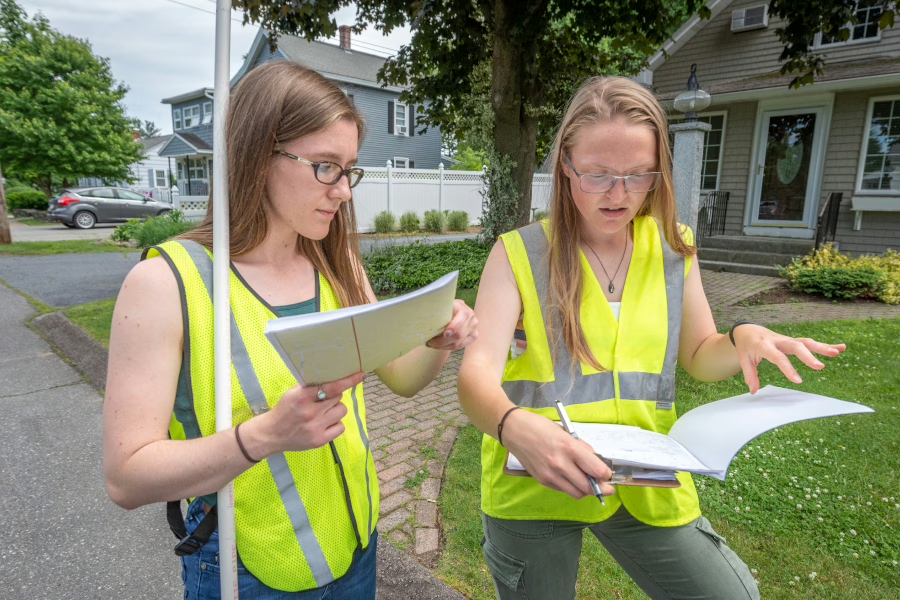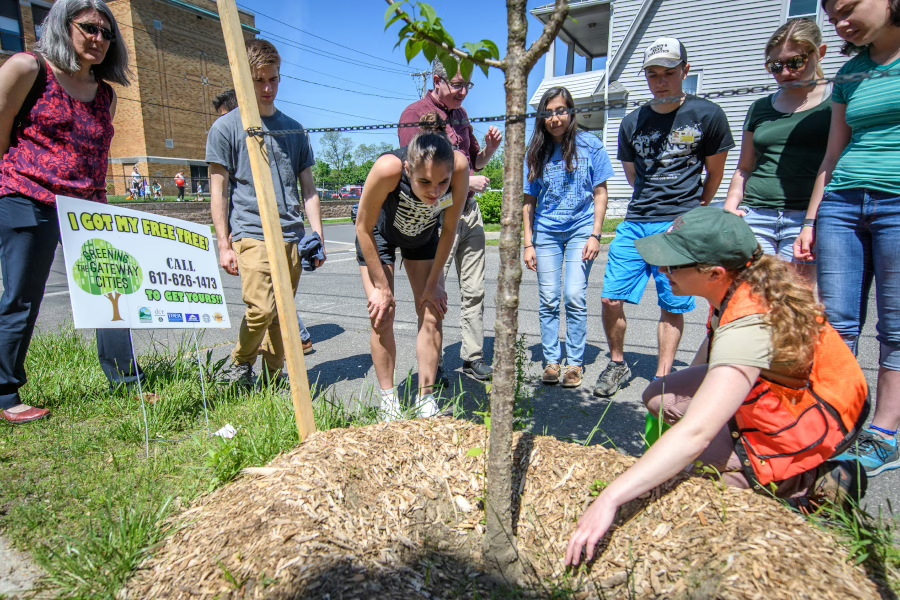

HERO Summer 2013
Clark University HERO Summer 2013 application information »
HERO-Massachusetts: Two Main Areas of Research
Hero engages in two main areas of research concerning the causes and consequences of the Asian longhorn beetle (ALB) infestation in central Massachusetts on urban and ex-urban forests:
Beetle Impact Assessment
This stream will
- Produce validated measures of spatial and temporal changes in tree cover composition on the ALB-infestation area
- Evaluate impacts of ALB on forest diversity and cover at present and in the future
Methodologies used include landscape metrics, GIS, remote sensing and geospatial modeling.
Place-Making Assessment
This stream will
- assess management and policymaking responses to community concerns in response to the ALB impacts, involving stakeholders throughout the analysis.
- Evaluate ALB impacts by socio-economic status, race/ethnicity and management/governance regime to explore how a more engaged stakeholder group would respond to policy as a result of the ALB experience.
Methodologies used include qualitative methods, such as interviews and focus groups.
Sponsors
- National Science Foundation
- George Perkins Marsh Institute at Clark University
- The John T. O'Connor '78 Endowed Fund for Environmental Studies, Clark University
- National Oceanic and Atmospheric Administration's National Marine Fisheries Service
- Henry David Thoreau Foundation
- Mosakowski Institute for Public Enterprise, Clark University
This material is based upon work supported by the US National Science Foundation (NSF) Grant Nos. BCS-0948984, BCS-0709685, OCE-1058747, EF-1065741, SES-0951366, SES-0849985, SBE-1156935 and through the PIE, ULTRA-EX, CNH, MACRO-BIO, DCDC II and FCE groups of the LTER. This material is also based upon work supported by US Dept of Commerce (NOAA SARP) Grant No. NA09OAR4310141. Any opinions, findings and conclusions or recommendations expressed in this material do not necessarily reflect the views of the NSF.
The Asian longhorn beetle infestation in Central Massachusetts will be studied by the HERO REU Summer 2013 program. This year's program will continue work started in the summer of 2012.
NEWS
April 2012: Clark HERO receives new NSF $329,992 grant for Asian Longhorn Beetle Infestion in Worcester Area.
Professors John Rogan (lead PI) and Deborah Martin (co-PI) were awarded a three-year, $329,992 "REU Site" grant from the US National Science Foundation entitled “Mapping Beetles, Trees, Neighborhoods, and Policies: A Multi-Scaled, Urban Ecological Assessment of the Asian Longhorned Beetle Invasion in New England (HERO), May 2012 – April 2015.” The purpose of this research is to examine multiple dimensions of the Asian longhorn beetle infestation in Central Massachusetts, from mapping impacts to future projections and multi-scalar policy responses. It will help to unite diverse efforts and establish Clark as a principal player in addressing the ALB crisis in New England. On June 4, 2012 an opending reception for new HERO students and stakeholders was held at Clark. See article >
August 2011: Clark receives $200,000 portion of new NSF $2.7M grant.
New $2.7M NSF grant "Collaborative Research: Ecological Homogenization
of Urban America," is expected to transform scientific understanding of the
nation’s growing urban landscape – on ecological and sociological levels.
Project Principal Investigator is from the Cary Institute of Ecosystem Studies
in Millbrook NY. The Clark University portion of this grant is $200,000 and the
project leader is co-PI, Colin Polsky. The grant is partly built from research done through other active HERO
grants over the past few years.
See article >
USA Today features article on housing crunch with data from HERO and related work.
June-July 2011: HERO REU Summer Program
HERO REU Summer program brought in 7 students from around the US and 5 students from Clark University to work in 3 research areas. Click on the PEOPLE drop down on the right of this screen and click on "FELLOWS" for details of these summer projects.
September 2010: "Ripped from the Headlines" of Clark Home page
HERO research program at Clark thriving; student fellows honored. HERO offers
high level research opportunities for undergraduates.
See article and video >
August 2010: HERO students in COMPASS program
The science of communication - Clark students learn how to bridge the gap
between science and the media as part of the COMPASS, Communication Partnership
for Science and the Sea, program.
Read more >
January 2009: New NSF REU research grant awarded to HERO
Professor Colin Polsky was recently awarded a three-year, $360,000 "REU Site" grant from the US National Science Foundation, with Professors John Rogan and R. Gil Pontius, Jr. as co-principal investigators. This award will take the Clark HERO program to the national level.
HERO Object-oriented Lawn Mapping
See the how-to guide for producing <1m lawn maps by the HERO Object-oriented Lawn Mapping for Exploring Suburbia (HOLMES) team.
This follows a $1.4 million research grant awarded to HERO in September 2007 that was intended to catalyze research by HERO Professors Polsky and Pontius.