Business and technology
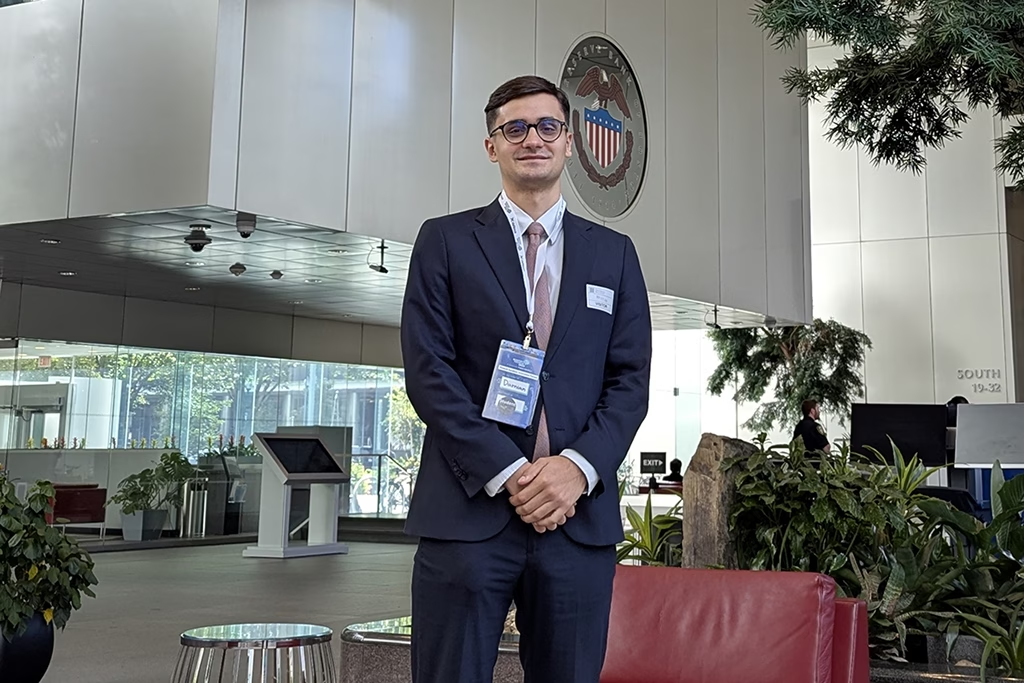
We will develop principled leaders and innovators to navigate complexity, harness technology, and create positive impact.
Business and technology are converging quickly, and Clark’s strategy is to treat them as co-joined disciplines rather than two adjacent ones. They bring the School of Business’s foundation in management, finance, and analytics into direct alignment with the technical and computational skills — data science, automation, applied AI — that now shape how modern organizations are run. We will integrate technology and business at the curricular level so students learn both simultaneously.
Execution depends on continued focus across existing strengths: the undergraduate management major, the Entrepreneurship and Innovation minor, and graduate programs in business analytics and information management. The priority going forward is coherence — making sure these programs share a common thread around data fluency, systems thinking, and ethical reasoning about technology’s use, rather than developing independently. Clark’s existing emphasis on social responsibility and AACSB-aligned rigor gives us a distinct anchor: technical capability paired with judgment about consequences, not technical capability alone.
“We are committed to developing professionals, who will lead with integrity, who understand the broader impact of their decisions, and who are equipped to drive meaningful impact in their organizations and community.”
Jing Zhang
Dean, School of Business
Experiential learning is a significant mechanism for putting this integration in practice — placing students in internships, consulting engagements, and ventures where business and technology decisions are made under real-world constraints. Strengthening in this area means deepening those placements and partnerships specifically around technology-driven business problems, so the University’s practical infrastructure keeps pace with the curricular one. This positions Clark to produce graduates equipped to lead — and to ask hard questions about — the technological transformation of business itself.