

Current Research Projects

The Marsh Institute draws on expertise from the social, natural, and technical sciences to conduct multidisciplinary, integrated research programs, both nationally and internationally. Its studies typically represent the interactions in various ways of humans and the environment. Many diverse themes exist. The following are some of the Institute's current projects, listed alphabetically by principal investigator.

The following are some of the Institute's current projects, listed alphabetically by principal investigator:

Organizational Dynamics of the U.S. Logistics Industry: The Impacts of Inter-firm Networks, Technologies, and Globalization
Principal Investigators: Yuko Aoyama and Samuel Ratick
Funding Agency: National Science Foundation

The aim of this study is to understand the organizational dynamics of the logistics industry. The research is designed to provide insights into: (1) How competing market governance principles influence the organizational logics of the logistics industry; (2) How logistics firms make decisions on outsourcing; (3) How virtual and geographic spaces interact in the organization of the logistics industry. The study will focus on dimensions identified as particularly important: use of global information technologies, intensification of global trade, and changing geographic requirements.

Emergence of an Institution for Sustainable Development: Cross-country Study of the Global Reporting Initiative
Principal Investigator: Halina S. Brown
Funding Agency: National Science Foundation

The subject of this cross-disciplinary research is the Global Reporting Initiative (GRI), a rapidly diffusing system for voluntary reporting of environmental sustainability performance by companies worldwide. The process of institutionalization of the GRI in three countries with different regulatory styles (the United States, the Netherlands, and Hungary) will be examined and compared. The work will focus on the organizational field: it will follow the dynamic interactions within and among the key actors who collectively comprise the institution of GRI reporting.

Strengthening Vulnerable Communities in the Worcester Built Environment
Co-Principal Investigators: Timothy Downs and Laurie Ross
Funding Agency: National Institute of Environmental Health Sciences

The aim of this research is to test two coupled working hypotheses: (1) a manageable, reduced set of primary built-environment stressors of a physical, chemical and socio-economic nature conspire to drive human health and well-being vulnerability in the Main South and Piedmont neighborhoods of the city of Worcester; and (2) this socio-economic vulnerability can be described and improved through an anticipatory process that fosters experiential learning, builds community ownership, strengthens the adaptive capacity of those set most at risk, and makes environmental and health promotion policies more responsive to those most in need.

Spatial Monitoring of Trends in Biodiversity through Time Series Analysis of High Temporal Resolution Remotely Sensed Imagery
Principal Investigator: J. Ronald Eastman
Funding Agency: Gordon and Bettty Moore Foundation

Under this grant, Clark Labs will analyze large archives of satellite imagery, explore and develop time series analysis and data mining procedures and develop software that can be used to analyze these archives on an ongoing basis. The resulting system will allow the identification of areas that are undergoing significant changes in biodiversity as a result of anthropogenic drivers such as habitat degradation and climate change. Field stations can then follow up confirming the trends and identifying their specific nature and cause.

Analysis and Interpretation of Hyperspectral Imagery for Mapping Distributions of Fraxinus Species and Emerald Ash Borer Host Trees
Principal Investigator: J. Ronald Eastman
Funding Agency: United States Department of Agriculture, Animal Plant and Health Inspection Service

Emerald ash borer, an exotic wood-boring beetle from East Asia, has been discovered in Michigan and parts of Ohio and Indiana. Left unchecked, it poses a very serious threat to forests in the United States. Survey for the beetle is difficult because it is already spread over a wide area, many ash trees and stands are inaccessible from the ground, and trees exhibit few outward signs of attack until they are moribund. This project will analyze hyperspectral imagery acquired from aircraft to produce maps of ash tree distributions and trees in various stages of attack by the beetle.

Gypsy Moth Risk Mapping for Uninfested Portions of the United States
Principal Investigator: J. Ronald Eastman
Funding Agency: United States Department of Agriculture, Animal Plant and Health Inspection Service

The gypsy moth, a destructive forest pest, has spread across much of the northeastern and midwestern United States. The defoliation caused by outbreaks of this pest causes significant ecological and economic damage. A technique used to combat its spread has been a trapping program to monitor and predict its speed. This program can be improved through newer data management practices and analysis. The project will use available data and, when appropriate, develop new information to construct maps for potential gypsy moth establishment and damage in uninfested portions of the United States.

Land-use Modeling and Prediction for Biodiversity Conservation in the Andes
Principal Investigator: J. Ronald Eastman
Funding Agency: Conservation International

The objective of this project is to develop a modeling environment for the monitoring and prediction of land-cover change, the assessment of biodiversity impacts and the evaluation of alternative planning scenarios. Major areas of research will consist of modeling habitat vulnerability, habitat suitability analysis, habitat status assessment, biological corridor development, and reserve planning.

Mining FDI, Corporate Social Responsibility and Sustainable Development
Principal Investigator: Jody Emel
Funding Agency: National Science Foundation

This study will examine the "new" socially responsible mining sector in the gold fields of Tanzania, an area of recent and aggressive mineral development and large potential. Surveys of workers and non-workers in impacted communities (e.g., Lake Victoria) will be conducted, sustainable livelihood changes will be assessed, and a "revenue filière" elaborating flows of revenues from mines to governments and communities will be developed.

AIDS2031: Social Drivers of the Epidemic's Cluster
Principal Investigator: William Fisher
Funding Agency: UNAIDS

AIDS 2031 has been developed to chart a course that would shift the global AIDS response from today's short-term, crisis management, approach to a long-term sustainable response. The Drivers working group's responsibility is to raise a number of questions related to the key social drivers of the epidemic.

The Polaris Project: Rising Stars in the Arctic
Principal Investigator: Karen Frey
Funding Agency: National Science Foundation

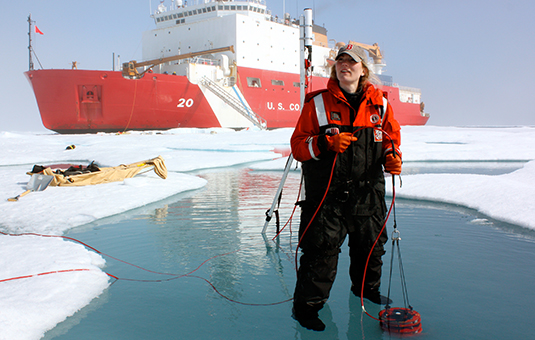
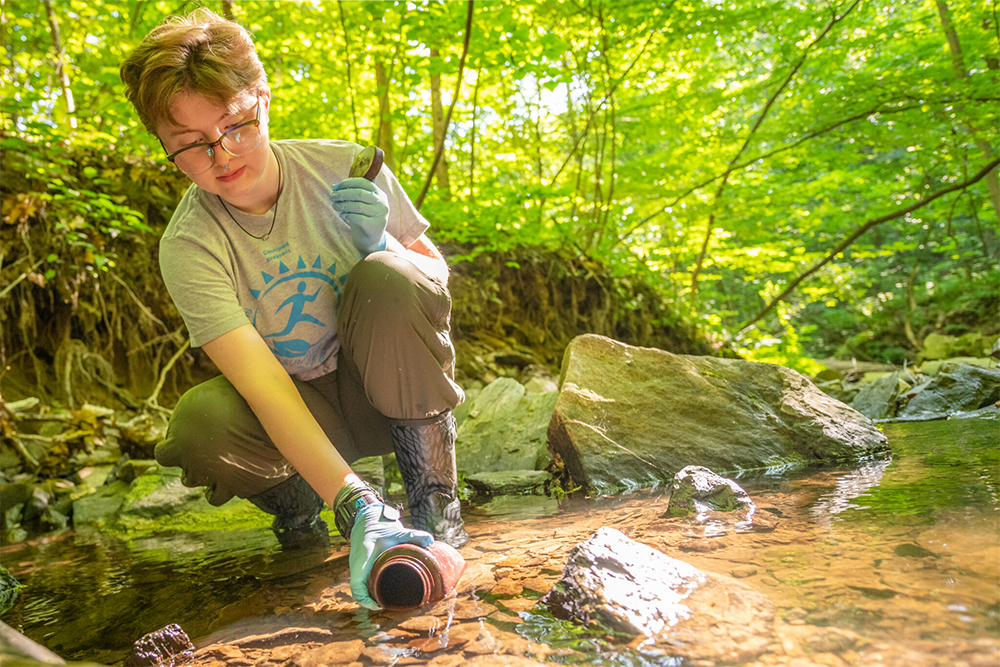
The Polaris Project is a multifaceted effort that includes: a field course and research experience for undergraduate students in the Siberian Arctic, several new arctic-focused undergraduate courses taught at colleges across the United States and in Russia, the opportunity to initiate research programs in the Siberian Arctic, and a wide range of outreach activities. The Polaris Project will help train future leaders in arctic research and education, which is essential given the rapid and profound changes underway in the Arctic in response to global warming.

Biologically-based Risk Modeling with a Focus on Cellular Repair Mechanisms for Radiation-induced Damage
Principal Investigator: Robert Goble
Funding Agency: Department of Energy

Ionizing radiation holds a special place among environmentalists because of the extent of information available about radiation effects on humans, on other animals, and on cells and cell systems. The information available has been enhanced recently with the availability of new genetic assays that shed light on both low-dose effects and the rates of processes, such as DNA repair, that can modify the expected incidence of effects of low doses and dose rates. With so much information available, along with very substantial ongoing research efforts, it is a propitious time to attempt syntheses in the form of biologically based risk models.

Highly Uncertain Risks: Prospects for Improved Assessment and Management
Co-Principal Investigators: Robert Goble, Dale Hattis, Roger Kasperson, and Seth Tuler
Funding Agency: National Science Foundation

This project will examine situations of high uncertainty, including implications of uncertainty for hazard assessment, hazard management, and societal response and how high uncertainty affects the links among these three areas. Active interaction with practitioners in six challenge hazards--unregulated chemicals, radioactive waste, extreme sea-level rise, EMFs, terrorist acts, and emerging diseases--will occur.

Why Do Plants Comply with Environmental Regulation? The Importance of Enforcement Activity, Abatement Costs, and Community Pressures
Principal Investigator: Wayne Gray
Funding Agency: Environmental Protection Agency

This study examines factors affecting environmental performance (both compliance status and emissions for air, water, and toxic pollutants) in paper mills, steel mills, and electric utilities. Four questions will be addressed: (1) How do corporate environmental culture and government regulatory interventions influence a plant's environmental performance? (2) Do community and political pressures on the state and local level significantly affect performance? (3) Why do firms and plants differ in their response to government interventions? (4) Is environmental performance in one plant related to the performance of nearby plants?

Quantitative Analysis of Empirical Data on Age-related Susceptibility to Carcinogenesis from Non-mutagenic Carcinogens
Principal Investigator: Dale Hattis
Funding Agency: Environmental Protection Agency

This project builds upon two prior efforts by Clark University researchers and the Environmental Protection Agency (EPA). The research consisted of the expansion and analysis of an EPA-assembled database of comparative adult and early-life animal cancer bioassay results. The team then assessed the implications of these animal data for human risk assessment for exposures to mutagenic carcinogens during fetal life and childhood, together with associated uncertainties. Later the investigators developed a preliminary classification system for putatively non-mutagenic carcinogens during fetal life and childhood, together with associated uncertainties. For the current work, the study team will update the classification system and apply it to categorizing the EPA's recently expanded database of age-related observations of cancer bioassays. The categorized data will then be analyzed statistically.

Interspecies Differences and Human Inter-individual Variability in Tissue-level Pharmacokinetic Parameters
Principal Investigator: Dale Hattis
Funding Agency: Environmental Protection Agency

Physiologically based pharmacokinetic (PBPK) modeling is increasingly being used to assess the doses of toxicants that are delivered to places in the body where they may cause effects. This project will develop two kinds of tools for PBPK modelers, aimed at helping analyze (1) interspecies differences and (2) human inter-individual differences in the activity of specific enzymes. Compilations and analyses of databases of observations from the basic scientific literature will be undertaken. The results will guide modelers in forming baseline assumptions about the magnitude and direction of differences in enzyme activities among species and among different people.

Use of Biomarkers and Physiologically Based Pharmacokinetic (PBPK) Modeling in Risk Analysis for Developmental Effects of Chlorpyrifos
Principal Investigator: Dale Hattis and Rob Goble
Funding Agency: Environmental Protection Agency

The primary goal is to use PBPK modeling to help derive a developmental Reference Dose (RfD) for Chlorpyrifos (CPF). Other parts of the project will evaluate the internal dose-response for adverse effects in developmental and mechanistic toxicity studies in rodents for comparison with humans; use the PBPK modeling approaches to assess population exposures and risk from CPF, based on NHANES general population measurements of a specific CPF urinary metabolite; and develop more general recommendations for the collection and interpretation of dynamically changing biomarker measurements for health risk assessment modeling.

Sustainability Science: From Knowledge into Action
Principal Investigator: Roger E. Kasperson
Funding Agency: Lucile Packard Foundation

The purpose of this project is to help maintain and indeed accelerate the momentum of the sustainability science initiative over the two years between mid-2004 and the launch of the next phase of the program in mid-2006. Two closely related elements will be studied: a focused Partnership Team effort to link knowledge with action in emerging areas of sustainability science; and a Science/Practitioner dialogue to catalyze significant increases in the quantity and effectiveness of knowledge/action partnerships around the world, and to develop and implement the capacity to establish and implement such partnerships.

The Socio-spatial Aspects of Industrial Change in Bolivia: Manufacturers, Regions, and the Prospects for Global Value Chain Integration
Principal Investigator: Deborah Martin
Funding Agency: National Science Foundation

This project will explore the interactions of citizen groups and lawyers in place-based disputing. The proposed research will expose the connections between legal practices and land-use outcomes. It will aid policy-makers, lawyers, social service providers and community groups in their efforts to mediate land use conflicts and to realize less contentious resolutions.

The Socio-spatial Aspects of Industrial Change in Bolivia: Manufacturers, Regions, and the Prospects for Global Value Chain Integration
Principal Investigator: James Murphy
Funding Agency: National Science Foundation

Global economic trends indicate that while Latin America has generally struggled with export-led development, Asia's economies have prospered through increasing global market integration. The contrasts are particularly significant in the manufacturing sector, and the growing gaps between Asia and Latin America raise important questions about why Latin American manufacturers have been less successful in reaping the benefits of economic liberalization policies. Bolivian industries have performed particularly poorly. This study examines Bolivia's manufacturing sector and assesses the prospects for its firms and businesses to upgrade their production capabilities such that they might develop stronger ties to global markets.

The Socio-spatial Aspects of Industrial Change in Bolivia: Manufacturers, Regions, and the Prospects for Global Value Chain Integration
Principal Investigator: James Murphy
Funding Agency: National Science Foundation

Research Experiences for Undergraduates (REU) supplemental monies will fund two undergraduate students who will support the main project--on global value chain integration in Bolivia's wood products industry--by conducting a semi-independent analysis of forestry policies and their relationship to growth, innovation, and development in the wood products sector. The focus of their research activities will be on understanding how forest management policies are influencing the development of the industry and on determining the degree to which current policies are encouraging and facilitating sustainable management practices in Bolivia's forestry sector.

Continued Support of the Undergraduate Component of the HERO Program
Principal Investigator: Colin Polsky
Funding Agency: Henry David Thoreau Foundation

The Henry David Thoreau Foundation, in support of the undergraduate component of the Human-Environmental Regional Observatory (HERO) Program, has given funding for an additional year, to begin in August 2007. This funding will catalyze two new research tracks for the HERO program. Professor John Rogan will conduct a study of Central Massachusetts drumlins to explore trends in human-caused landform alteration and loss since 1970. Processor Colin Polsky will examine, with additional support from the National Oceanic and Oceanic Administration, how prepared New England fishing communities are to cope not only with variations in climate and ocean conditions, but also changes in national fish-catch policies and coastal suburbanization development pressures.

Suburbanization, Water-Use, Nitrogen Cycling & Eutrophication in the 21st Century: Interactions, Feedbacks & Uncertainties in a Massachusetts Coastal Zone
Principal Investigator: Colin Polsky and Robert Pontius
Funding Agency: National Science Foundation

The research examines the links between suburbanization and environmental factors while integrating basic research across disciplines. Click here for more information: www.clarku.edu/offices/publicaffairs/news/press/2007/NSFgrant.cfm and www.nsf.gov/news/news_summ.jsp?cntn_id=110437&org=NSF&from=news

Plum Island Ecosystems LTER
Principal Investigator: R. Gil Pontius
Funding Agency: Subcontract with Marine Biological Laboratories, under NSF Prime Award

This is an integrated research, education and outreach program whose goal is to develop a predictive understanding of the long-term response of watershed and estuarine systems at the land-sea interface to changes in climate, land use and sea level. Understanding and predicting how multiple stresses affect the sustainability of ecosystems is one of the most crucial challenges in environmental biology. How several aspects of global change influence organic matter and nutrient biogeochemistry and estuarine food webs will be studied.

Action Research on a Collaborative, Multi-pronged Approach to Prevent and Reduce Youth and Gang Violence in Worcester, MA
Principal Investigator: Laurie Ross
Funding Agency: Massachusetts Executive Office of Public Safety

This collaborative action research project will work in partnership with the City of Worcester, the Worcester Police Department, and Worcester Community Action Council to understand the effectiveness of the new Start Our Success (SOS) program. This innovative program is designed to provide education, work readiness, counseling, and other support services to young people coming out of jail or lock-up. The research team will examine the strengths and challenges of this program as it is being implemented so as to help the City improve SOS in real time. Another aim is to follow the young people and other stakeholders through the process in order to understand the extent to which the program allows them to maintain full-time, meaningful employment and leave their gangs and illegal activities.

Diffusion of Emerging Energy Technologies within a State Context
Principal Investigator: Jennie Stephens
Funding Agency: National Science Foundation

This cross-disciplinary research examines the interconnected, state-level, socio-political influences on diffusion and deployment of emerging energy technologies with potential to contribute to an energy system transformation for climate change mitigation and energy security.

Demonstrating a Risk-Based Approach to Rapid Vulnerability Assessment in New England Fishery Communities
Principal Investigator: Seth Tuler; Co-PI's: Tom Webler, Colin Polsky
Funding Agency: National Marine Fisheries Service, NOAA, US Department of Commerce

Demonstrating a Risk-Based Approach to Rapid Vulnerability Assessment in New England Fishery Communities The primary goal of our project is to demonstrate the practicality and utility of an innovative rapid vulnerability assessment framework for gathering routine social, economic, and cultural information about vulnerabilities of sub-groups to inform fisheries management decision-making. The information derived from assessments based on this framework can improve understandings of potential vulnerabilities and disproportionate impacts arising from proposed regulatory changes.

HERO: Human-Environment Regional Observatory Network
Principal Investigator: B.L. Turner II
Funding Agency: Subcontract with Pennsylvania State University, under NSF prime award

Global environmental change is essentially a human problem. It results from myriad human actions occurring in local places. At the same time, people experience and respond to global environmental changes in localities. Consequently, there has been a proliferation of research centers and sites dedicated to studying the local implications of the human dimensions of global environmental change (HDGEC). This project attempts to answer critical questions about the complex relationships among individuals, communities, and their environments over time and space, and to bring scientists, stakeholders, and decision makers together to address fundamental issues linking nature and society.

Click here for a progress report of the HERO program, summarizing the start-up interval of the first seven years from summer 1999 to summer 2006.

The Vulnerability and Adaptive Capacity of Coupled Human-Environment Systems in the Southern Yucatán Peninsular Region: A Transition Effort
Principal Investigator: B.L. Turner II
Funding Agency: National Science Foundation

Since 1997, a large, interdisciplinary project has been developing data and analysis to understand the human and biophysical effects of deforestation, and to model and project land changes in the southern Yucatán. The understanding gained is being used to develop insights about the vulnerability and resilience of coupled land uses and land covers in the region, ultimately building toward a full-blown vulnerability study. This particular research seeks to lay out some of the critical factors linked to sustained human disturbance and increasing aridity (climate change) on the land systems of the area.

Landscape Resilience-Vulnerability in the Southern Yucatán Peninsular Region: Land Cover/Land Use Change
Co-Principal Investigators: B.L. Turner II, J. Ronald Eastman, and John Rogan
Funding Agency: National Aeronautics and Space Administration

This project employs novel uses of NASA data and products to determine the changing resilience-vulnerability of the land system and its capacity to provide a prescribed set of ecosystem services in the face of near-term social and biophysical hazards. The consequences of deforestation and intensified land use towards creating more deciduous forest and warmer landscape conditions, and how these affect landscape buffering capacity, will be examined.