
Graduate and undergraduate opportunities at Marsh

Funded RA Positions in the Geography PhD Program

In September 2007, the Clark University Graduate School of Geography was awarded a 4.5-year, $1.4M grant from the National Science Foundation Coupled Natural and Human Systems competition. This project engages two Clark geography professors and three ecologists (at the Marine Biological Laboratory and the University of New Hampshire). The project, entitled "Suburbanization, Water Use, Nitrogen Cycling, and Eutrophication in the 21st Century: Interactions, Feedbacks, and Uncertainties in a Massachusetts Coastal Zone," is designed to blend cutting-edge basic research on social, ecological and geographic information sciences into a common analytical framework. The motivating research questions are: What causes suburbanization? What are the associated effects? What are societyÕs responses to these effects? What are likely to be future geographic patterns of suburbanization, its effects, and responses?

Professor Polsky (cpolsky@clarku.edu) has financial support for a doctoral research assistant interested in studying human-environment interactions. No background is required in this research domain, but some combination of skills and interest in human geography (emphasizing environmental risks/hazards and suburbanization processes), land-use planning, statistics, economics, and environmental science is desired.

Professor Pontius (www.clarku.edu/~rpontius) has financial support for a doctoral research assistant who has sufficient computer programming and GIS experience to be a computer programmer at Clark Labs (www.clarklabs.org). The assistant will program statistical methods for map comparison, hydrological flows, and land change science into the GIS software Idrisi, which has more than 40,000 licensed users world wide.

These positions are each potentially renewable for up to 4 years beginning summer or fall 2008. This project is an outstanding opportunity for beginning PhD students to gain sustained research and professional experiences in a prominent interdisciplinary and inter-institutional program. Project team members will interface with blossoming national and international networks of social and natural scientists. These networks are attempting to bridge conceptual and methodological gaps regarding coupled human-environment system vulnerabilities and resiliencies on a topic of significant social importance for the 21st Century. Candidates should apply to the PhD program of Clark University's Graduate School of Geography (www.clarku.edu/departments/geography/). Inquiries should be directed to Professor Polsky (cpolsky@clarku.edu).

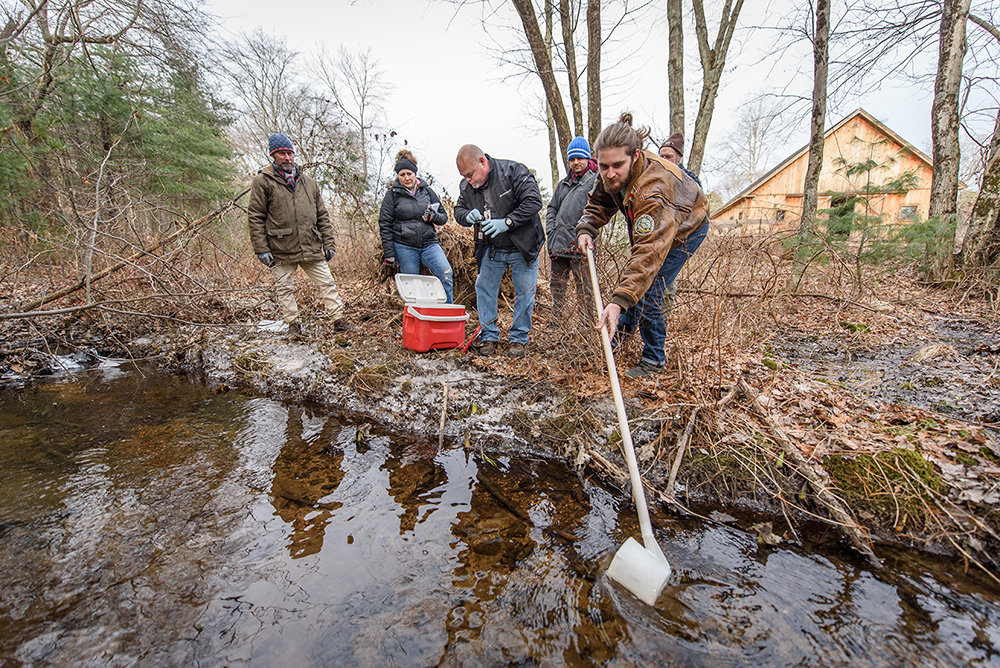
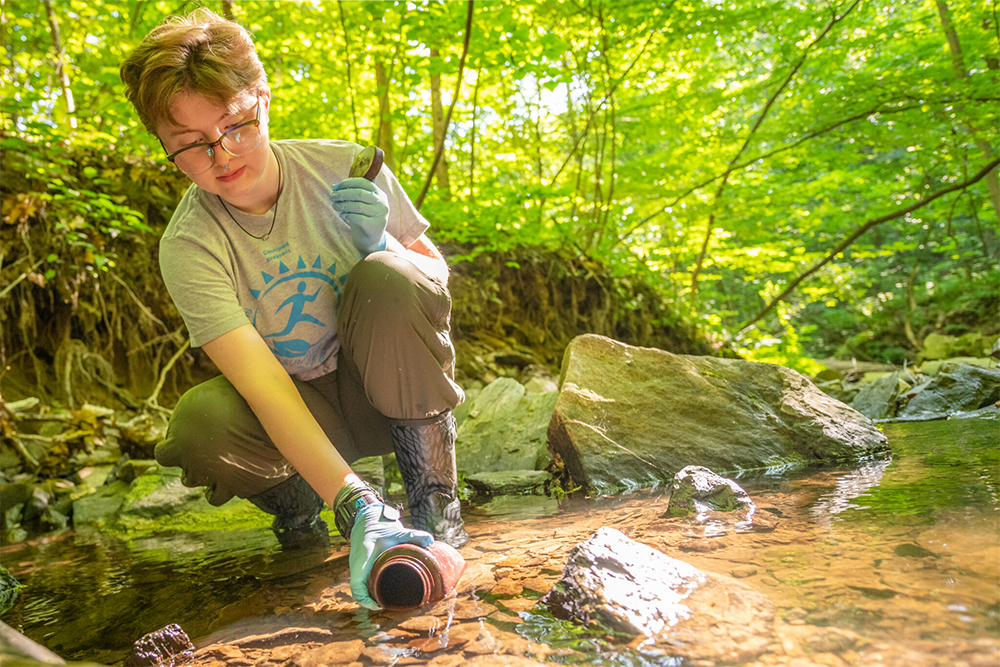
The following positions integrally linked to this project are also open: UNH is looking for a post doctoral research associate to assist in a study of hot spots of aquatic biogeochemical activity and their influence on nutrient exports from the Ipswich River watershed, located in northeastern MA. The study focuses on the role of channel and floodplain N retention and/or denitrification, and their response to hydrological changes associated with suburbanization. The position will require extensive field work. Some experience with modeling will be preferred. This work is part of a larger project (in collaboration with Clark University and the Marine Biological Laboratory) to better understand feedbacks through coupled human natural systems. Please contact Wilfred Wollheim (wil.wollheim@unh.edu) for more information.

Professor Charles Hopkinson has financial support for a postdoctoral associate to examine the effects of hydraulic connectivity of river floodplains on nitrogen dynamics in the Ipswich River watershed in northeastern Massachusetts. Experience in watershed biogeochemistry or modeling would be appropriate. The position be based out of the University of Georgia, but will involve substantial field work in Massachusetts and interaction with ongoing research by University of New Hampshire and Marine Biological Laboratory scientists. Please contact Charles Hopkinson (chopkins@mbl.edu) for more information. Our web sites www.clarku.edu/offices/publicaffairs/news/press/2007/NSFgrant.cfm and www.clarku.edu/departments/hero/cnh provide additional information.

Geller Student Research Awards for Projects Relating to Sustainability

Geller Student Research Awards were established by the family of Dr. Howard Geller. Howard graduated from Clark in 1977 with a degree in Physics and in Science, Technology and Society (now Environmental Science and Policy); He earned graduate degrees at Princeton and the University of Sao Paolo and became the first executive director of the American Council for an Energy Efficient Economy (ACEEE) After twenty years of accomplishments at ACEEE, including contributions to the National Appliance Energy Conservation Act of 1987 and the Energy Policy Act of 1992, he left ACEEE to found and direct the Southwest Energy Efficiency Project (SWEEP) in 2001.

Remembering his own experience as an activist student researcher at Clark, through these annual awards Howard hopes to support other Clark students as they combine research with action that moves society toward sustainability. The awards are intended to support student-initiated research projects that have the potential to advance both our understanding of opportunities for greater sustainability in the human use of resources and the environment and practical improvements that can be implemented. Preference will be given to the new or exploratory projects, rather than well established ongoing research programs, as well as projects that cannot be carried out without the financial support from the Geller award. After completion of their projects, awardees will be expected to present their findings at an appropriate university forum. Both undergraduate and graduate students are eligible for awards.

Given the intent of the Geller award, proposals will be evaluated on the following criteria:

We anticipate making approximately three awards in amounts ranging from $1,500 to $2,000, and several smaller grants, up to $1,000.

Applications for a regular award ($1,500-$2,000) must contain a 3 to 5 page description of the proposed project which

In addition to the project description (and not counted in the 3-5 page limit), the application must contain a short (250-300 word) project summary, a one-page proposed budget with an explanation of the purpose of the proposed expenditures.

Applications for a small award (<$1,000) should be shorter (2-3 pages) but also include a project summary and an itemized proposed budget. Before submission, final proposals should be reviewed and approved by a faculty advisor who should be clearly identified on the first page of the proposal. Proposals exceeding the page limits will not be accepted.

Please also include the following additional information:

If the proposal is for a portion of a larger project with a more extensive budget, the proposal must state clearly and explicitly how financial support from a Geller award would compliment the larger project.

The deadline for applications is November 15, 2007. A faculty committee that shares Howard's interests in student research and activism for sustainability will select the successful proposals. Announcement of the awards will be made before the end of the fall 2007 semester. Applications should be submitted electronically as pdf files to Angela Nelson at the Marsh Institute.

Marsh Graduate Internships

The George Perkins Marsh Institute is offering paid internships to graduate students for the Fall 2007 semester. Positions run from October to the end of December with some flexibility. The goal of the internship is to assist faculty in developing research projects. Interns will be paired with a faculty member, depending on research interests and will be expected to work an average of 8-10 hours per week. The pay rate is $12/hour.

The Marsh Institute is dedicated to research in the areas of environment, technology and development with focus on risk management, human-environment relationships and sustainable development. For a listing of current projects, please see:

http://www.clarku.edu/departments/marsh/projects/index.shtml

How to apply: Send your resume and a letter of interest, detailing your research interests and experiences, to Angela Nelson or bring it by the Program Office at 16 Claremont Street. Applications are due by October 17, 2007.

Mailing address:
Clark University
Marsh Graduate Internships
George Perkins Marsh Institute
950 Main Street
Worcester, MA 01610-1477

Contact: For more information or with questions, please contact Angela Nelson at AnNelson@clarku.edu or call 508.751.4622.

Types of internships available: Inquiries about exact offerings and openings should be made through Angela Nelson at the Marsh Institute. Marsh is multidisciplinary and conducts research around topics involving the environment, technology and development. Associations with departments on campus include Biology, Economics, Geography, Government, IDCE, and Clark Labs, among others.

Other Research Opportunities

Visit the Research Projects Page

Our faculty are not just teachers and scholars. They care about what happens in each student's progress to academic maturity, acting as mentors, respecting individual learning styles, and taking pride in pushing each student beyond his or her own expectations. That's why our faculty of experts give undergraduates the unique chance to work side by side with them.

...Our faculty of experts give undergraduates the unique chance to work side by side with them.

Today, more than 50 percent of the undergraduate students are involved in research with a faculty member. (Read about Clark students' research.) You can find out more about pursuing academic research by talking to your faculty advisor or the head of your chosen major. Plans are also in the works for a Virtual Research Center, where research opportunities will be posted on this site. Watch for more information in the next few months.