
Clark’s undergraduate Environmental Science Program draws from the expertise of faculty and departments from across campus, addressing the physical, biological, geographical, and management and policy aspects of the natural environment. As a major or minor in this interdisciplinary program, you will examine environmental challenges from all academic perspectives — the natural sciences, social sciences, and humanities — and from the perspective of action and change.
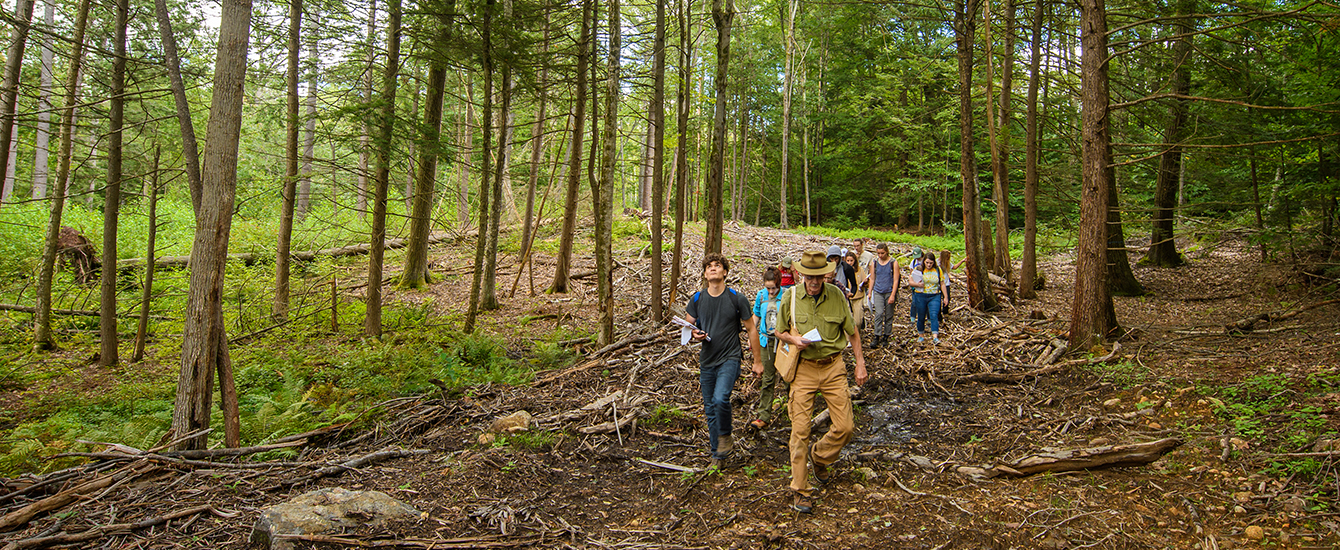
Welcome to the Environmental Science Program
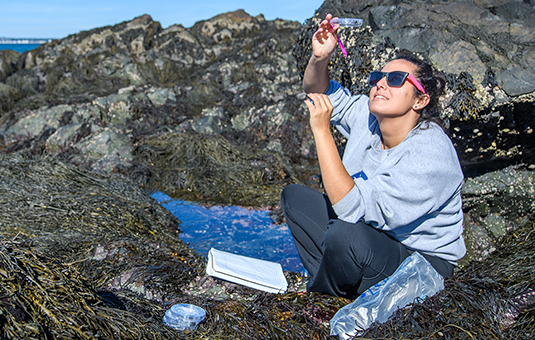
Undergraduate Program
Put your learning into practice. Get outside and examine natural environments, take part in research projects, intern at environmental organizations, explore diverse places and spaces, and take action on and off campus.
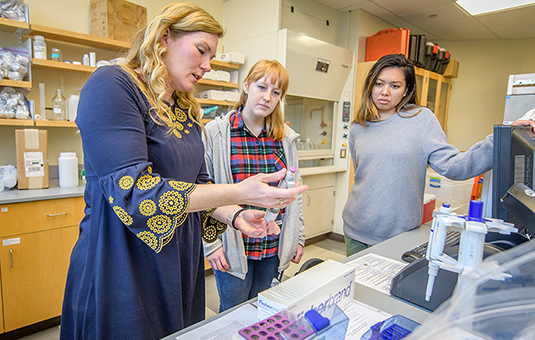
Research
Research in environmental science spans a wide range of academic fields. Conduct research on your own or as part of a team in collaboration with your peers, faculty, graduate students, alumni, and our broader networks.
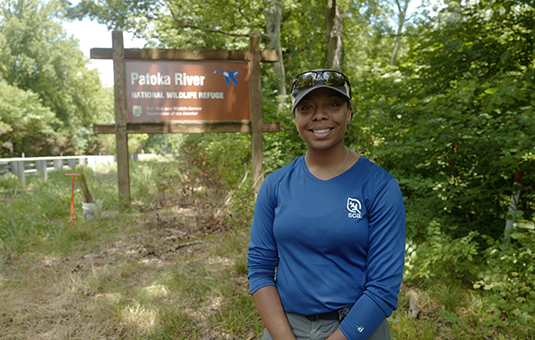
Careers and Internships in Environmental Science
We help our majors secure internships and research experiences with a wide variety of organizations and institutions, in part by leveraging our extensive networks. Our graduates pursue graduate school and careers in science, government, business, consulting, and education.
Related Accelerated Degree Programs
B.S./M.S. in Biology
Interested in graduate school and conducting more research? Want to further explore the biological aspects of environmental science? Build on your bachelor’s degree in environmental science by applying for a master’s in biology, with your fifth year tuition-free.
B.S./M.S. in Environmental Science and Policy
Interested in effecting environmental change through policy? Build on your bachelor’s degree by applying for a master’s in environmental science and policy, with your fifth year tuition-free.
B.A./M.S. in Geographic Information Science (GIS)
Learn how to use geographic information science tools and techniques as part of your research in environmental science. Apply for a master’s in GIS, with your fifth year tuition-free.
News
View All NewsFeatures
News
View All News

Clark HERO program celebrates a big milestone
Hands-on initiatives let students apply research muscle to local challenges

Internship helps Clark senior hatch a career plan
Environmental science major is restoring fish to New England’s waterways

HERO fellows work for tree-deprived communities
Environmental initiative partners students with Mass. Gateways Cities
Features

A new Earth conversation
A new Earth conversation is a campus-wide climate change initiative that offers a space of reckoning, reflection, community, creativity, and discerning action in a time of planetary crisis.
With funding from the Christopher Reynolds Foundation, this initiative has built upon a vision generated by Clark faculty over the last four years.
This semester, watch for events and courses tied to the new Earth conversation initiative.
Contact Information
Environmental Science
Contact Us
-
Kaitlyn Mathis
Associate Professor of Biology - 1-508-793-7514
- clarku-environmentalscience[at]clarku[dot]edu
Quick Links
Copyright © 2026 Clark University
Public Information
|
Privacy Policy
|
Website Accessibility
|
Nondiscrimination Policy